Skip to content
Back to Blog
Quoting

The CPQ Migration Playbook: What to Do Before You Switch Tools

Switching CPQ tools? Learn what to fix first in your pricing, approvals, and data before a CPQ migration breaks your quoting process again

Quotivity
Quotivity

May 05, 2026

Most CPQ migrations fail because nothing behind the tool was ready.

Teams switch platforms expecting things to get easier. Instead, the same pricing confusion, approval delays, and messy quotes show up in a new system. Different interface, same problems. Quotes still take too long to build, pricing is still inconsistent, and approvals still slow everything down.

If you’re thinking about replacing your CPQ, the real work starts before you choose a new one.

Why teams decide to replace their CPQ

Teams do not go through the pain of switching quoting systems unless something is already breaking.

Pricing tends to be the first issue. What starts as a simple structure becomes layered over time with exceptions, special cases, and one-off deals. Reps stop trusting the system because it does not reflect how deals actually get priced, so they fall back to spreadsheets or side calculations just to get quotes out the door.

That is where speed starts to slip. A quote that should take minutes turns into something that takes hours to piece together, especially when revisions are involved. Every change introduces risk, because pricing is no longer controlled in one place.

At the same time, approvals become inconsistent. Some deals get approved quickly, while others sit in inboxes waiting for someone to respond. There is no clear logic behind who needs to review what, so everything slows down.

All of this adds up to real business impact. Slow quotes delay deals. Inconsistent pricing leads to revenue leakage. Lack of control makes it harder to protect margins and forecast accurately.

Eventually, the team decides it is time to switch.

What actually breaks during a CPQ migration

Most teams approach a CPQ migration like a setup project. They focus on moving products, rebuilding templates, and configuring the new system.

That part is relatively straightforward.

The real challenge shows up when they try to define how quoting should work going forward. Basic questions start coming up, and the answers are not clear.

Pricing rules are often undocumented or buried in spreadsheets. Approval logic exists in practice but not in a structured way. Templates have been edited so many times that no one knows which version is correct. Data is inconsistent across products, customers, and past deals.

When those gaps exist, the new system becomes a cleaner version of the same problem. It may look better, but it does not operate better.

What you need to figure out before switching your CPQ

A successful migration starts with clarity. Before moving to a new CPQ, teams need to define how quoting should actually work in a way that can be enforced inside a system.

That work usually comes down to four areas.

1. Pricing structure

Pricing needs to be defined in a way that can be applied consistently across deals.

This includes how products are priced, how discounts are applied, and how different scenarios are handled. For example, if pricing changes based on volume, region, or customer type, those rules need to be clearly documented and structured.

In a real workflow, this means a rep can build a quote without leaving the system or referencing external files. The correct price should appear automatically based on the inputs, instead of being calculated manually.

Without that structure, reps will continue to rely on workarounds, even in a new tool.

2. Approval logic

Approval processes need to be predictable and enforceable.

Many teams have informal rules around discounting and deal review, but those rules are not consistently applied. One manager might approve a deal quickly, while another might request multiple revisions. That inconsistency slows everything down and creates confusion for reps.

Before migrating, teams need to define clear thresholds and conditions for approvals. For example, what level of discount requires approval, and who is responsible for reviewing it.

In practice, this means approvals should trigger automatically based on the quote details, rather than relying on manual escalation through email or chat.

3. Templates and quote experience

Templates often get treated as a design task, but they are part of the quoting workflow.

If templates are hard to update or inconsistent across teams, they slow down the process and create friction. Reps spend time fixing formatting or adjusting content instead of focusing on the deal.

A clean setup means templates are standardized, easy to update, and aligned with how quotes are built. When a rep generates a quote, it should already be structured correctly without additional editing.

This becomes especially important when products, pricing, or messaging change, because those updates need to be reflected quickly across all quotes.

4. Data cleanup

Data issues tend to surface quickly during a migration.

Product catalogs may include duplicate entries or outdated pricing. Customer data might be incomplete or inconsistent. Historical deals often contain errors that were never corrected.

If that data is moved into a new system without cleanup, it carries the same problems forward.

A strong migration process includes reviewing and standardizing product data, cleaning up pricing inputs, and making sure the information used to generate quotes is accurate. This creates a stable foundation for the new system to operate on.

What a better CPQ setup actually looks like

When these pieces are defined before the migration, the difference is clear.

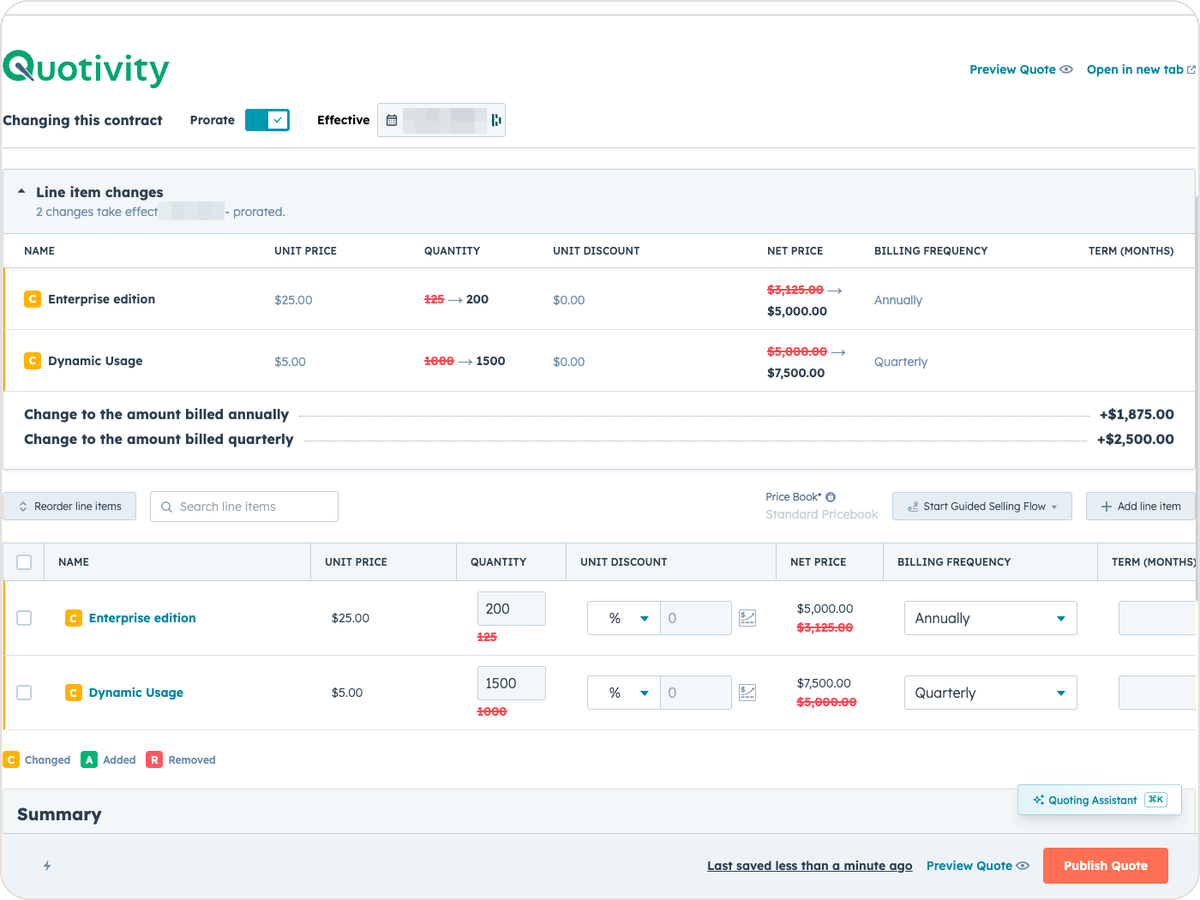
Reps can build quotes directly inside HubSpot without switching between tools or checking spreadsheets. Pricing is applied automatically based on defined rules, so there is less guesswork and fewer errors. Approval workflows run in the background, routing deals to the right people without slowing down the process.

This is where speed and control start to improve at the same time.

Quotivity is built around that model. It adds advanced pricing, configuration, and approval logic inside HubSpot so teams can generate accurate quotes quickly while maintaining control over pricing and margins.

The tool matters, but only after the process is clear.

Quotivity fixes broken CPQ migrations and helps you quote faster inside HubSpot

Quotivity brings structure to the parts of quoting that usually break during a migration. Pricing rules live in one place and apply automatically, so reps are not guessing or checking spreadsheets. Approval logic is enforced based on real thresholds, which keeps deals moving without back-and-forth in email. Templates and product data stay consistent, so every quote follows the same rules and reflects the right pricing.

That is what turns a CPQ migration into an actual improvement instead of a reset. If your team is planning a switch or already feeling the same issues in a new tool, it is worth seeing how this works in practice. A demo will walk through how quotes get built, priced, and approved inside HubSpot so you can see where speed, accuracy, and control come from.


Latest Articles

The CPQ Migration Playbook: What to Do Before You Switch Tools

The CPQ Migration Playbook: What to Do Before You Switch Tools

Switching CPQ tools? Learn what to fix first in your pricing, approvals, and data before a CPQ migration breaks your quoting process again

One Product, Many Prices: How to Manage Tiered Pricing Without Losing Your Mind

One Product, Many Prices: How to Manage Tiered Pricing Without Losing Your Mind

Streamline tiered pricing with structured price books, ensuring faster quotes, improved accuracy, and stronger margins in your sales proces...

The Hidden Deal Killer: Quote Approvals That Live in Email

The Hidden Deal Killer: Quote Approvals That Live in Email

Quote approvals are languishing in your emails and killing your deals. Integrate them into your workflow to eliminate delays, enhance visib...