Skip to content
Back to Blog 5 bottlenecks increasing your time to quote
Quotes

5 Bottlenecks Stealing Hours From Every Quote You Send

The bottleneck in most quote cycles isn't the rep. It's the handoffs, the lookups, and the approvals that were never designed to be fast. Here's how to get faster quoting.

Quotivity
Quotivity

May 26, 2026

A manufacturing rep recently burned close to six hours on a single quote, and still sent it with errors. Those six hours didn't disappear into typing. They disappeared into lookups, handoffs, approvals, and waits that nobody designed and nobody owns. And anybody blaming the rep totally misses where the time actually went.

The deal moves at the speed of the quote, so a week-long quote becomes a week-long deal. Most teams assume their reps are slow, when the honest version is that the process is slow and the rep is the only visible part of it.

Here's where the time actually goes, with what each bottleneck costs and what removes it.

What slows down the quoting process?

  1. Manual price lookups in spreadsheets or someone else's head
  2. Configuring bundles from memory and getting them wrong
  3. Approval chains that live in email
  4. Waiting on ERP data to confirm lead time
  5. Rebuilding the quote when the customer asks for a revision

1. The rep is hunting for pricing

A rep gets a request for pricing on a configuration they haven't quoted in a few months, so they open a spreadsheet, ping the one person who knows the current pricing, or wait for that person to come back from lunch.

In most manufacturers there's one guy who knows where every bolt lives, and another who knows where every price lives. When pricing sits in a spreadsheet or in someone's head, every quote is gated by their availability, which is tribal knowledge dressed up as a process.

What removes it is a price book inside HubSpot, segmented by customer type or region, that the rep can pull from directly on the deal record. The lookup stops being a separate step because the price is already where the quote is being built.

2. Bundles built from memory

Complex products don't sell as line items, they sell as configurations: a base unit, the right add-ons, the dependent accessories, the right service tier. When reps build those from memory, a service tech eventually opens the order and finds a mounting kit that doesn't fit the model or a required cable that never made it onto the quote.

Training doesn't fix this, because training degrades the moment a new SKU lands. Configuration rules enforced by the system do, because required items get added automatically and invalid combinations get blocked before the rep can put them on a quote.

The difference between a quote you trust and a quote you have to re-check shows up when a customer calls about a missing part, which is usually the moment a team realizes which kind of quote they've been sending.

3. The approval chain that lives in email

A rep sends a discounted quote to their manager for sign-off. The manager is on a flight, then in back-to-backs, then approves it Friday afternoon, by which point the customer has been quiet for two days and is talking to a competitor.

This is the most common 48-hour leak in a quote cycle, and it's almost always invisible on the dashboard. The deal looks active, the quote is "in review," and nothing is actually happening.

What removes it is conditional approval routing. Quotes inside discount thresholds go out instantly, and quotes that violate policy route to the right person automatically with the context already attached, so the manager isn't reconstructing the deal from a forwarded email thread.

When margin sits in front of every rep on the floor and the only check on it is a manager's inbox, the math doesn't end well. Approvals aren't slow because finance is slow, they're slow because the routing is a human inbox.

4. Waiting on the ERP for lead time

The rep has the config and the price, but they still need to confirm a lead time before sending, because a wrong promise on delivery is worse than a slow quote. So they open a ticket with ops, email the planner, or check the ERP themselves if they have access.

This step can add a day on its own. It's the quiet bottleneck nobody complains about because everyone agrees the rep should check. The problem isn't the checking, it's that the checking is manual.

The fix is the integration. Inventory and lead-time data pulled live from NetSuite, SAP Business One, or Epicor onto the deal record means the rep sees current availability while they're building the quote, instead of pausing the quote to go ask somebody.

5. The revision rebuild

The customer comes back: "Can we swap the Pro tier for Standard and add two more units?" In most quoting setups this is a rebuild — the rep opens the previous quote, copies what they can, re-enters what they can't, re-runs the discount, and re-sends for approval.

A revision like that runs about half an hour, and most deals see three or four of them before signature, which is where the six-hour-per-quote number usually comes from. The first quote is the cheap part of the cycle.

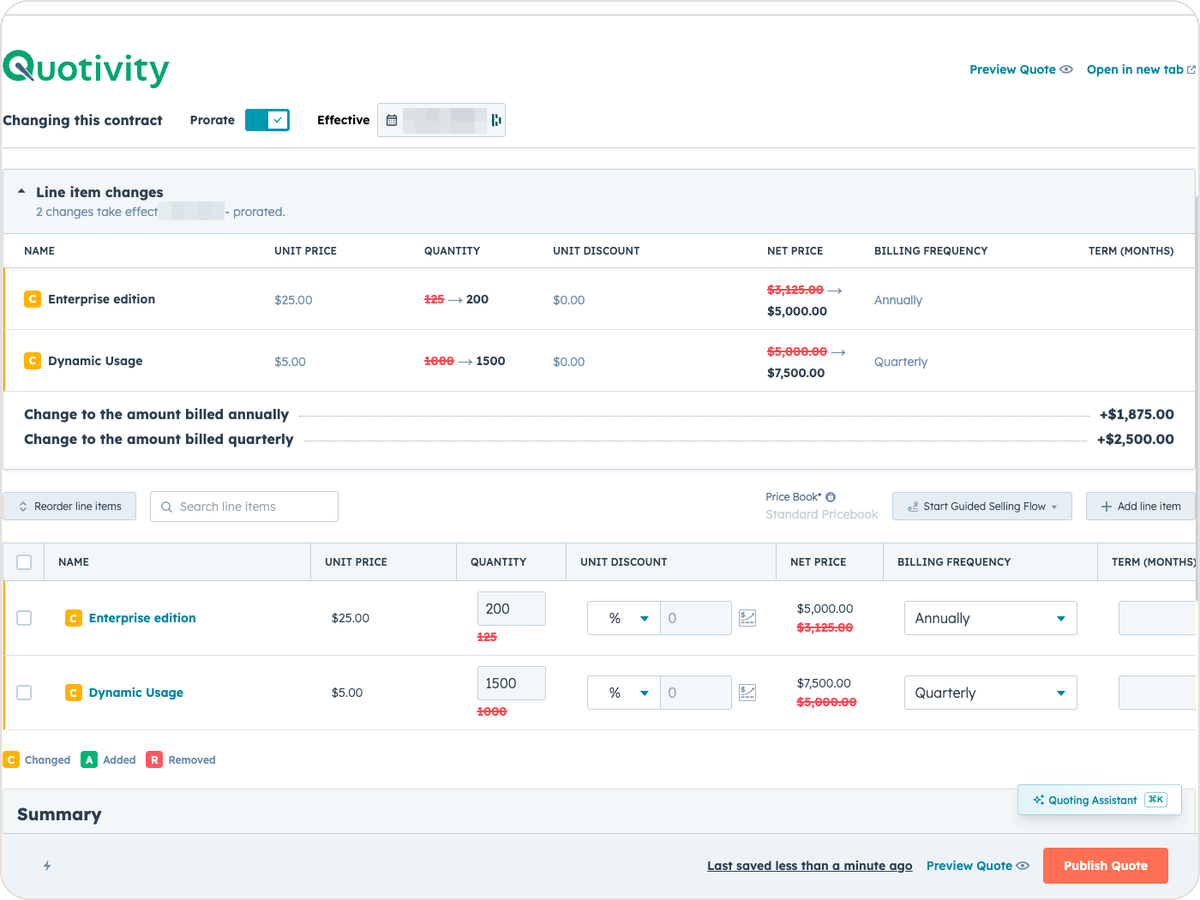
When the quote is a live object instead of a static document, a swap on a line item recalculates the pricing, reroutes the approval if it needs to, and produces a new version for the customer in minutes, without restarting the build.

The bottleneck isn't the rep

None of those five places where hours disappear are about typing speed. They're about handoffs and waits that were never designed in the first place, which is why hiring more reps or pushing the existing ones harder doesn't move the number much.

Aptarro cut their negotiation time by 79% after putting governance and configuration logic in the right place, which is the kind of result that comes from removing handoffs rather than from working harder against them.

The honest fix is to take the lookups, the rebuilds, the email approvals, and the ERP checks out of the rep's day, and put them in a system that does the work in the background — so the quote moves at the speed of the deal instead of the other way around.

Latest Articles

5 Bottlenecks Stealing Hours From Every Quote You Send

5 Bottlenecks Stealing Hours From Every Quote You Send

The bottleneck in most quote cycles isn't the rep. It's the handoffs, the lookups, and the approvals that were never designed to be fast. H...

Capture every detail. Quote at full speed.

Capture every detail. Quote at full speed.

Streamline your quoting process with Dynamic Property Sets, ensuring accurate product details and seamless handoffs between sales and imple...

What Is CPQ Software? (And When Does It Actually Make Sense)

What Is CPQ Software? (And When Does It Actually Make Sense)

CPQ software isn't enterprise software anymore. Here's what it actually is, what it does, and the moment you know you need it.