Product Releases: September Wrap Up
 Ryan Huff: Oct 2, 2026, 12:00:00 AM
Here's what shipped and which plans each one is on. Ramp Pricing and Deal fields are the only Enterprise plan item, and the rest reach every plan.
Multithreading gets talked about as a deal strategy, and for good reason.
In any meaningful B2B sale, one contact is rarely enough.
But in complex product sales, multithreading is not just about reaching more stakeholders. It's about keeping the story of the deal consistent as it moves through the organization.
That's where many teams fall short.
They involve multiple people, but the offer isn't easy to understand across roles. By the time the quote gets shared internally, the deal has picked up new confusion around pricing, bundles, contract length, or scope.
That isn't real multithreading. It's just spreading partial information around the account.
Multithreading becomes more important as the product gets harder to evaluate quickly.
When you sell a complex product, or any offer that includes configuration, services, bundles, approvals, or non-standard pricing, different stakeholders are solving for different outcomes.
A single-threaded deal can survive for a while when the offer is simple. A complex one usually cannot.
There are more questions to answer:
Each stakeholder holds a different piece of that puzzle, so if you're only talking to one person, you're getting a limited view.
The obvious risk of poor multithreading is that a deal stalls.
The less obvious risk is that the deal keeps moving while internal understanding gets weaker.
That usually shows up in familiar ways:
For complex product and CPQ sales, multithreading works only when the account can carry a clear version of your offer across conversations, departments, and approval steps.
Most teams think about quoting at the end of the sales cycle...way too late.
In complex sales, the quote is often one of the main tools stakeholders use to explain the deal internally. It's the artifact that carries your story when you are not in the room.
That means poor quote structure creates multithreading problems.
If a quote makes people ask basic questions such as:
...then the quote is forcing your champion to do translation work.
This is especially important in product configuration and CPQ environments, where complexity is real and often necessary. To be successful, you have to present the offer in a way that different stakeholders can understand quickly and explain accurately.
That is one reason modern revenue teams need more than basic quoting tools. As complexity grows, quoting becomes part of stakeholder alignment, not just document generation.
Think through this list when your offer involves complexity, customization, or multiple operational dependencies.
Don't wait for late-stage objections to discover who matters. Map the likely roles from the beginning: commercial owner, operational owner, finance approver, and end user or manager.
Don't settle for one version of the business case. The value, friction, and risk will look different to each stakeholder.
Your product configuration, pricing, and quote structure should make sense to someone who was not on the call. Don't make the buyer decode your proposal. They'll probably get it wrong.
The more complex the product, the more important it is to eliminate ambiguity around bundles, pricing terms, approvals, and workflow impact. Make internal alignment easier, not more dependent on the rep.
In complex sales, quoting is part of how trust is built, margins are protected, and momentum is maintained.
Complexity is not the problem. Most teams selling real products or services deal with custom pricing, configurations, and multiple stakeholders. The issue is when that complexity becomes hard to understand, explain, or align on across the buying group.
The best teams win by making their offer easy to evaluate and communicate internally. In complex sales, the quote plays a central role in that. It is not just a final document. It is how your deal gets interpreted by sales, operations, and finance. When quotes are unclear, multithreading breaks down and deals slow down.
Quotivity helps HubSpot teams bring structure to that complexity with better pricing, product configuration, and quote workflows built directly inside the CRM. The result is faster, clearer quotes that keep stakeholders aligned.
If your team is struggling to manage complex deals in HubSpot, book a demo to see how Quotivity helps you simplify quoting without losing control.

Ryan Huff: Oct 2, 2026, 12:00:00 AM
Here's what shipped and which plans each one is on. Ramp Pricing and Deal fields are the only Enterprise plan item, and the rest reach every plan.
 Ryan Huff: Sep 30, 2026, 9:50:30 AM
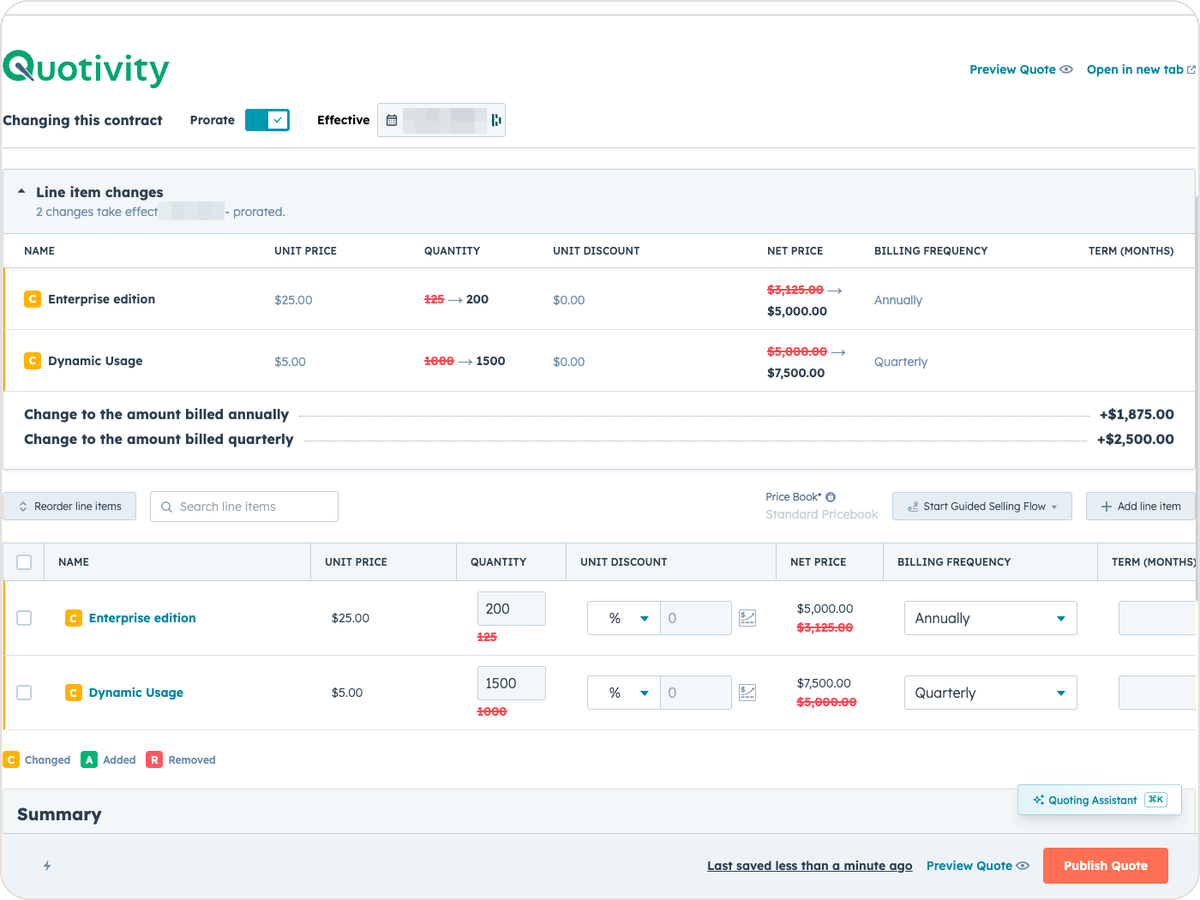
An equipment maker sells a bottler one packaging line. Partway through the term, the bottler calls back. Two more lines are going in, and they want...
Ryan Huff: Sep 2, 2026, 12:00:00 AM
Three changes from August for whoever maintains your Quotivity setup. Two of them, BLANKVALUE and bundle member summaries, are on the Enterprise plan.
 Ryan Huff : May 9, 2025, 12:00:00 AM
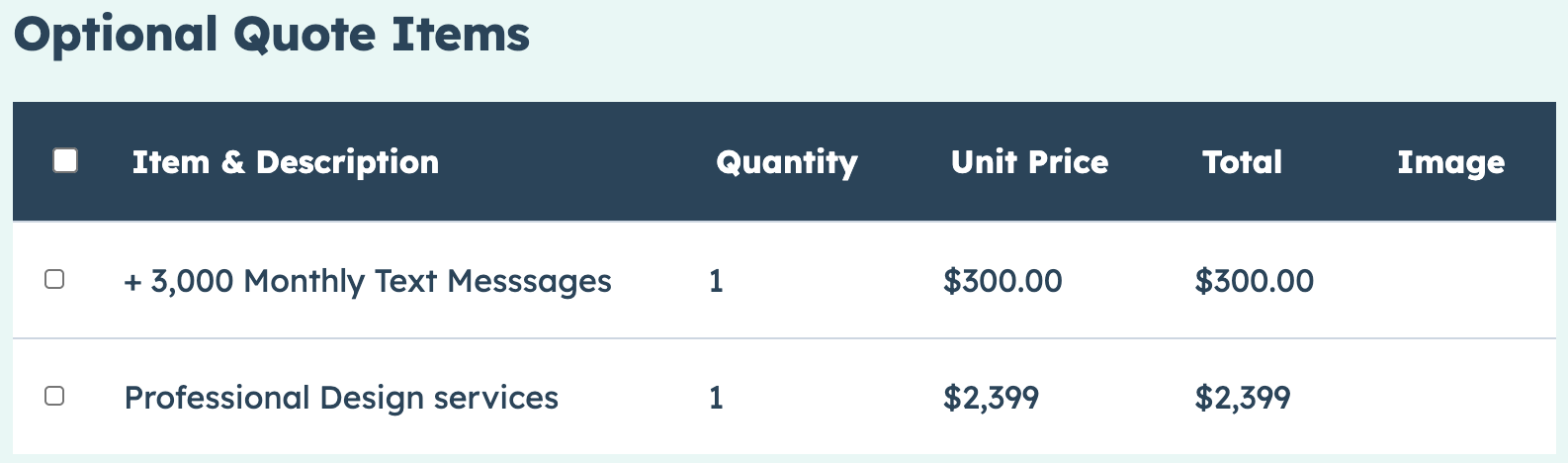
Discover Quotivity's new Optional Line Items feature in HubSpot to enhance your quoting process and meet customer demands effortlessly.
 Quotivity : Jul 4, 2026, 10:24:11 AM
Compare 5 HubSpot CPQ solutions for manufacturing in 2026. Find the right CPQ for complex pricing, guided selling, and margin protection inside...
 Ryan Huff : May 24, 2026, 4:35:57 PM
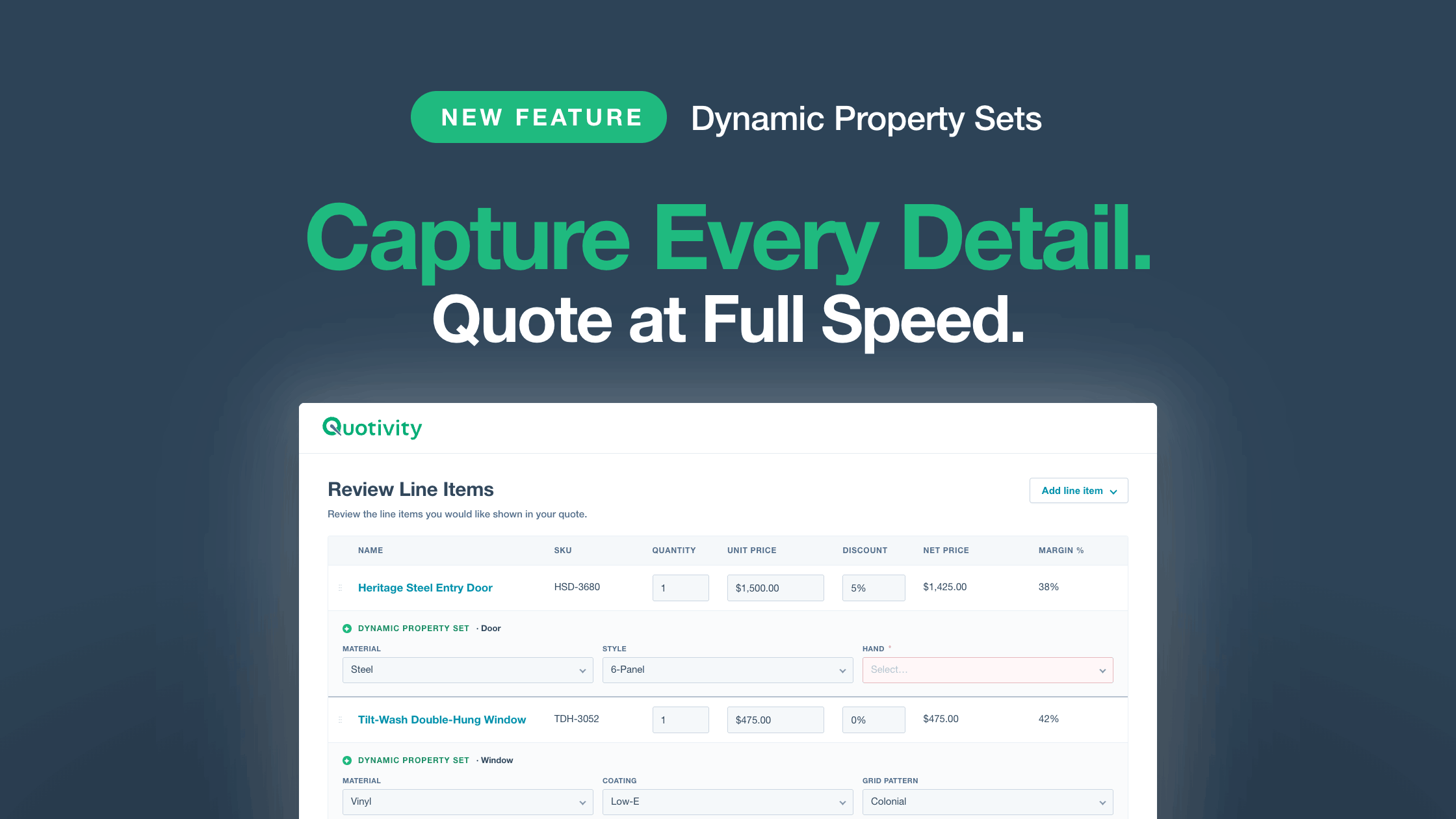
Streamline your quoting process with Dynamic Property Sets, ensuring accurate product details and seamless handoffs between sales and implementation...