
 Ryan Huff
Product Releases: September Wrap Up
 Ryan Huff: Oct 2, 2026, 12:00:00 AM
Here's what shipped and which plans each one is on. Ramp Pricing and Deal fields are the only Enterprise plan item, and the rest reach every plan.

Most companies don’t decide to build complicated approval workflows. It just happens.
A pricing exception shows up, so you add an “if/then.” Then Finance needs to weigh in for certain terms, so you add another branch. Then regional leadership wants visibility, then Legal needs a path for non-standard language… and suddenly your HubSpot workflow has dozens of conditions, nested logic, and brittle edge cases.

Approval Queues were one of Quotivity’s earliest features—and they’re still one of the most effective ways to keep approvals both powerful and simple.
A common pattern we see with prospects is Sales Ops trying to route approvals using workflow logic like:
This approach “works,” but it has drawbacks:
Approval Queues shift the routing logic out of the workflow and into the approval configuration itself.
When an admin sets up a Require Approval outcome in Quotivity, they can specify which Approval Queue should handle the request.
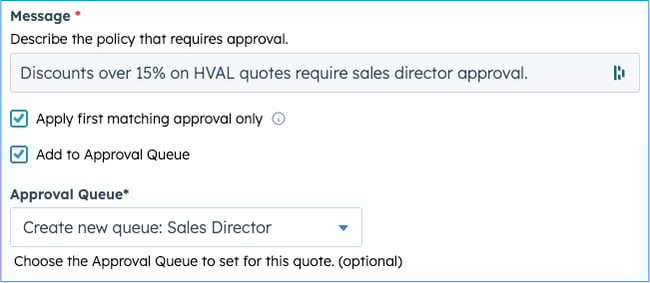
Then, in HubSpot, your workflow doesn’t need to replicate the entire decision tree.
Instead, the workflow only needs to do two things:
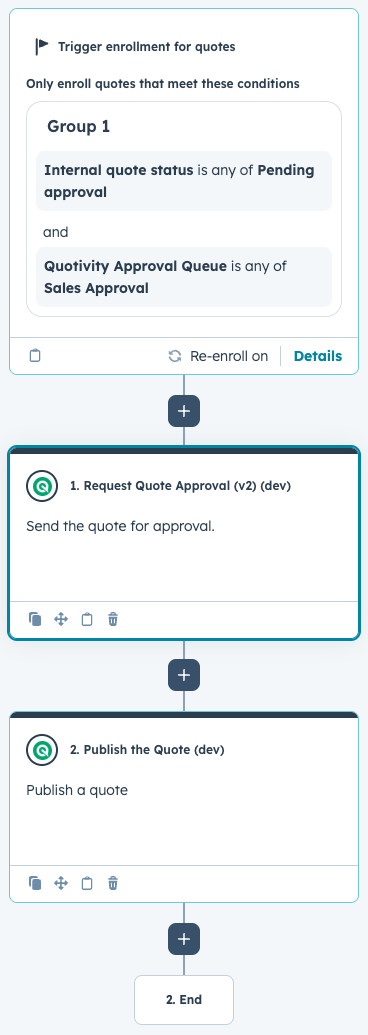
That’s it.
Of course, you'll have more than one of these: one for each approval queue. but the beautiful thing is, all of the rules are managed in one, clearly documented, place: Quotivity.
With Approval Queues, you avoid the “workflow as rules engine” trap.
Instead of a single workflow that tries to encode every routing nuance, you get:
In many cases, it turns an approval workflow from “a maze of if/else logic” into something that’s readable at a glance.
Imagine you have approvals across:
Without queues, admins often build one monolithic workflow with a branch for each combination.
With Approval Queues, you define queues like:
Then configure your approval rules so that the Require Approval outcome sets the appropriate queue based on your policy.
Now your HubSpot workflow is no longer a complex routing machine—it’s just the trigger mechanism.
Approval Queues aren’t just about neat workflows. They also enable:
Approvals land with the right group (or process) by design, not by fragile workflow logic.
Need to change who handles Net 60 requests? Update the queue or rule—don’t refactor a workflow.
As you add teams, regions, products, or pricing models, you add or adjust queues instead of adding another dozen branches.
When routing is standardized, reps and approvers know what to expect—and approvals move faster.
Approval Queues are one of those foundational capabilities that quietly make everything else better.
They let administrators implement complex approval processes without building complex workflows. And that’s the real win: routing stays flexible, while workflows stay streamlined.
If your approvals have started to feel “too complex to touch,” Approval Queues are usually the fastest path back to clarity.
Ryan Huff: Oct 2, 2026, 12:00:00 AM
Here's what shipped and which plans each one is on. Ramp Pricing and Deal fields are the only Enterprise plan item, and the rest reach every plan.
 Ryan Huff: Sep 30, 2026, 9:50:30 AM
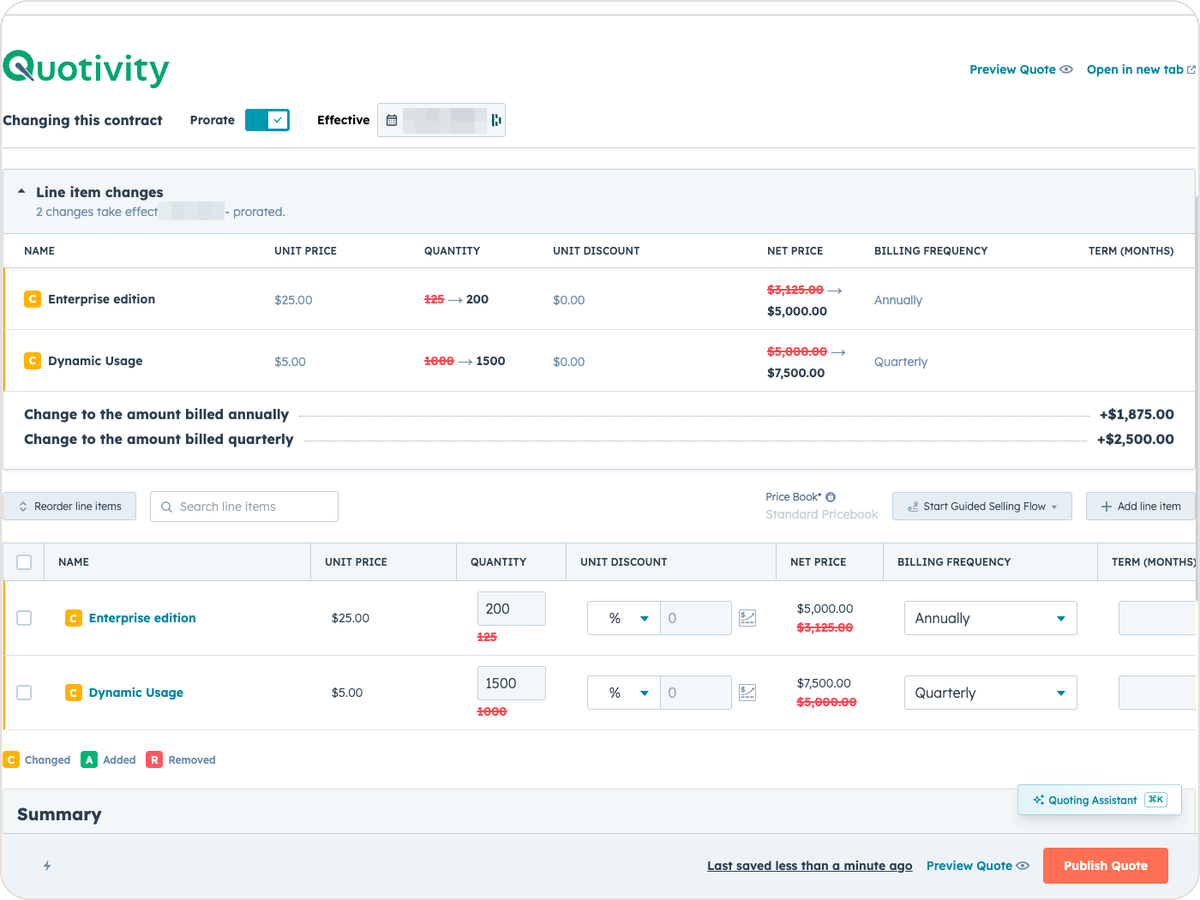
An equipment maker sells a bottler one packaging line. Partway through the term, the bottler calls back. Two more lines are going in, and they want...
Ryan Huff: Sep 2, 2026, 12:00:00 AM
Three changes from August for whoever maintains your Quotivity setup. Two of them, BLANKVALUE and bundle member summaries, are on the Enterprise plan.
 Ryan Huff : Feb 16, 2026, 11:55:42 AM
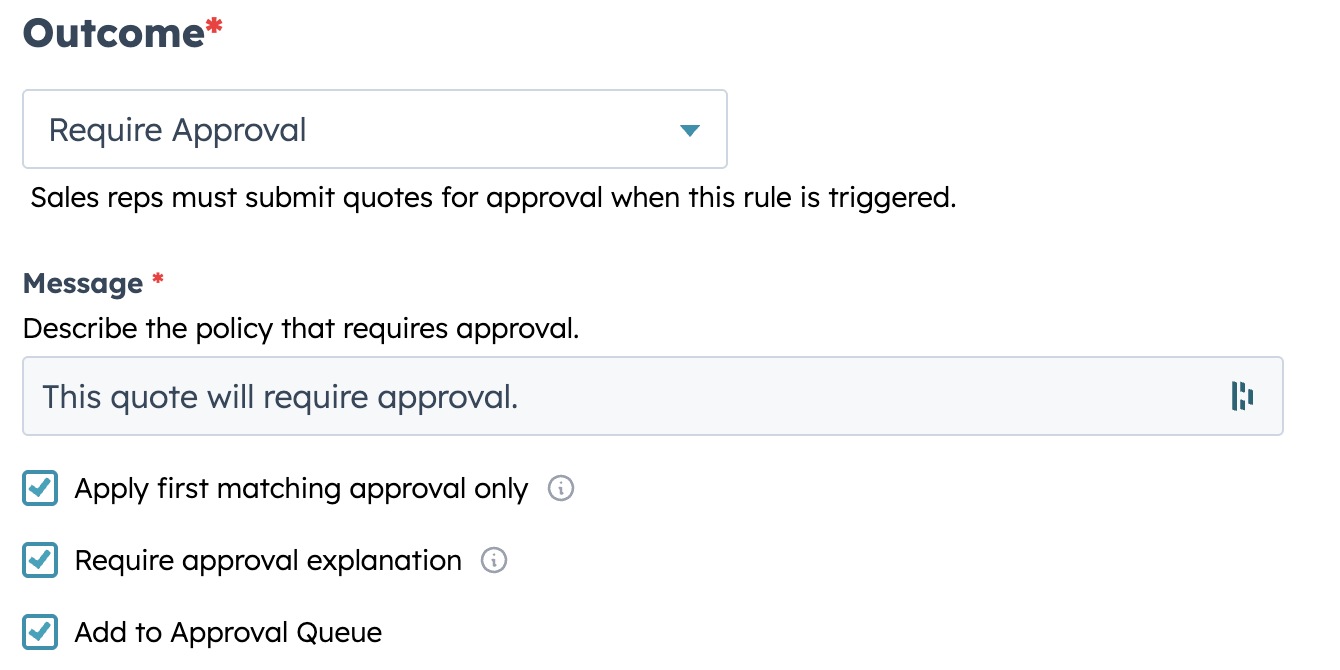
Speed up quote approvals with clear context. Learn how Quotivity's new Approval Request Explanation feature streamlines the process by reducing...
 Ryan Huff : Feb 16, 2026, 12:13:41 PM
Simplify hierarchical approvals in Quotivity with the new "Apply first matching approval only" feature, ensuring clear routing and reducing admin...
 Nikki Zangardi : Apr 8, 2025, 5:15:00 AM
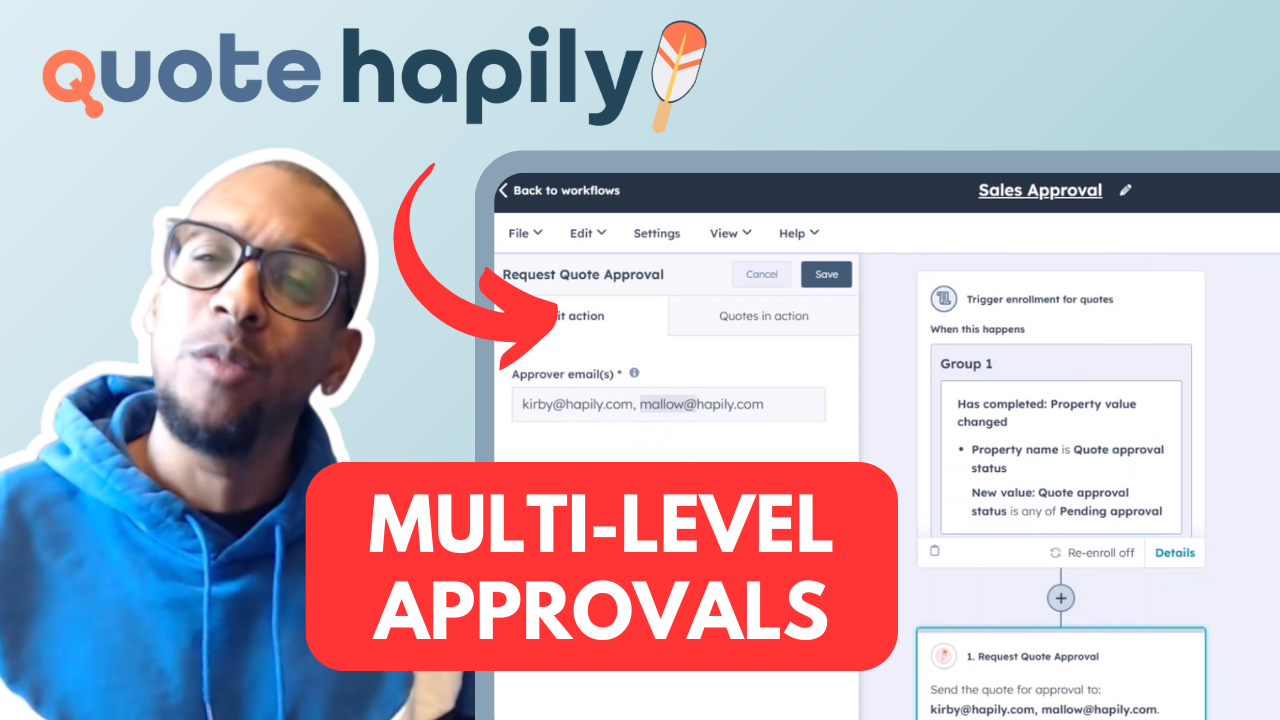
Reps move fast — now your approvals can too. Build multi-layer quote approvals in HubSpot with Quotivity and keep control without killing momentum.