 Quotivity
Product Releases: September Wrap Up
 Ryan Huff: Oct 2, 2026, 12:00:00 AM
Here's what shipped and which plans each one is on. Ramp Pricing and Deal fields are the only Enterprise plan item, and the rest reach every plan.

You have one product, but it rarely has one price. As companies grow, pricing starts to split across channels, regions, and customer types. What begins as a few exceptions quickly turns into a system that is hard to track and even harder to trust.
This is where quoting starts to slow down. Reps hesitate because they are not sure which price applies. Operations steps in to double check. Finance gets pulled into deals that should move on their own. Deals stall, and small pricing mistakes start to add up.
Pricing complexity is not the problem: The lack of structure around it is.
Most teams do not design a pricing system upfront. They react to real situations. A partner needs a different margin. A large customer negotiates special pricing. A new market requires different currency or packaging.
Each change makes sense on its own. Over time, those changes stack on top of each other.
Pricing ends up living in spreadsheets, internal docs, and tribal knowledge. Reps switch between tools just to build a single quote. In HubSpot, they often override pricing manually because the system cannot enforce all the variations.
This creates a gap between how pricing is supposed to work and how it actually works in a deal. HubSpot handles simple pricing well, but once pricing depends on customer type, region, or channel, teams start relying on workarounds.
That gap is where errors happen.
Tiered pricing is rarely just about discounts. It is a mix of rules that need to apply at the same time.
You might have different price books for resellers and direct sales, with margin expectations built into each. You might have customer-specific pricing for strategic accounts that overrides your standard catalog. You might also have regional pricing tied to currency, taxes, or supply costs.
Now layer in eligibility rules. Certain customers qualify for specific pricing based on contracts, territories, or buying groups. Some deals require approval if margins drop below a threshold.
All of that needs to come together in one quote.
Without a structured system, reps are left to piece this together manually. They choose a price, apply a discount, and hope it aligns with policy. When it does not, the quote gets kicked back. When it slips through, margins take the hit.
This is not just an operational issue. It shows up directly in revenue.
Slow quotes reduce deal velocity. When reps need help just to pick the right price, deals take longer to move forward. Buyers lose momentum, and close rates suffer.
Inaccurate pricing creates risk. A rep might underprice a deal to move it forward or overprice it and lose the opportunity. Either way, the business pays for it.
Lack of control leads to revenue leakage. Without clear rules, discounting becomes inconsistent. Finance loses visibility into how pricing decisions are made. Over time, margins erode without a clear reason why.
These problems are common when pricing is managed outside the quoting process. When the system does not enforce the rules, people are forced to.
The goal is not to simplify your pricing but to make it usable.
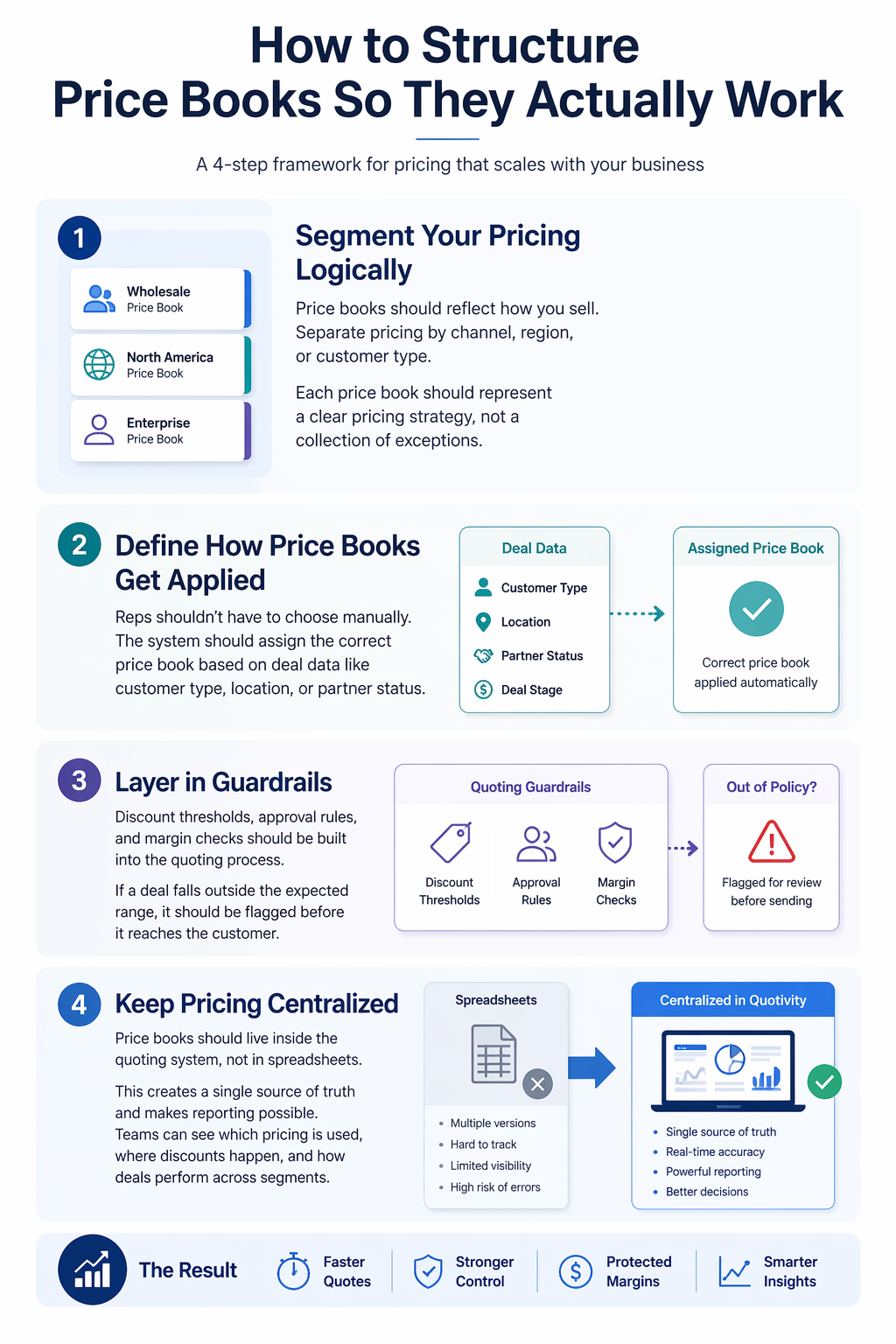
Start by segmenting your pricing logically. Price books should reflect how you sell. That usually means separating pricing by channel, region, or customer type. Each price book should represent a clear pricing strategy, not a collection of exceptions.
Next, define how those price books get applied. Reps should not have to choose manually. The system should assign the correct price book based on deal data like customer type, location, or partner status.
Then layer in guardrails. Discount thresholds, approval rules, and margin checks should be built into the quoting process. If a deal falls outside the expected range, it should be flagged before it reaches the customer.
Finally, keep pricing centralized. Price books should live inside the quoting system, not in spreadsheets. This creates a single source of truth and makes reporting possible. Teams can see which pricing is used, where discounts happen, and how deals perform across segments.
This is where price books become more than a list of numbers. They become a control system for how your business sells.
A rep opens a deal in HubSpot and starts building a quote. The system already knows which price book to use based on the customer. Pricing is applied automatically, including any customer-specific or regional adjustments.
If the rep adds a discount, the system checks it against defined thresholds. If it is within range, the quote moves forward. If not, it triggers an approval with the right context for the approver.
The rep does not need to reference a spreadsheet or ask for guidance. The process is built into the workflow.
Quotes go out faster. Pricing is consistent. Approvals happen only when they should.
This is exactly the layer most HubSpot teams are missing.
Quotivity brings structured pricing into the quoting process. Teams can manage multiple price books for different segments, apply them automatically using rules, and enforce pricing policies directly in the quote.
Instead of relying on reps to interpret pricing logic, the system handles it. Pricing, discounting, and approvals all happen inside HubSpot, so teams do not have to leave the CRM or manage external tools.
The result is simple. Quotes are built faster, pricing is more accurate, and margins are protected.
If you sell in more than one way, you already have tiered pricing. The question is whether it is controlled or improvised.
When pricing lives in spreadsheets and exceptions, it slows down deals and creates risk. When it is structured through price books and rules, it becomes an advantage.
Faster quotes. Better control. Stronger margins.
That is what a pricing system should do.

Ryan Huff: Oct 2, 2026, 12:00:00 AM
Here's what shipped and which plans each one is on. Ramp Pricing and Deal fields are the only Enterprise plan item, and the rest reach every plan.
 Ryan Huff: Sep 30, 2026, 9:50:30 AM
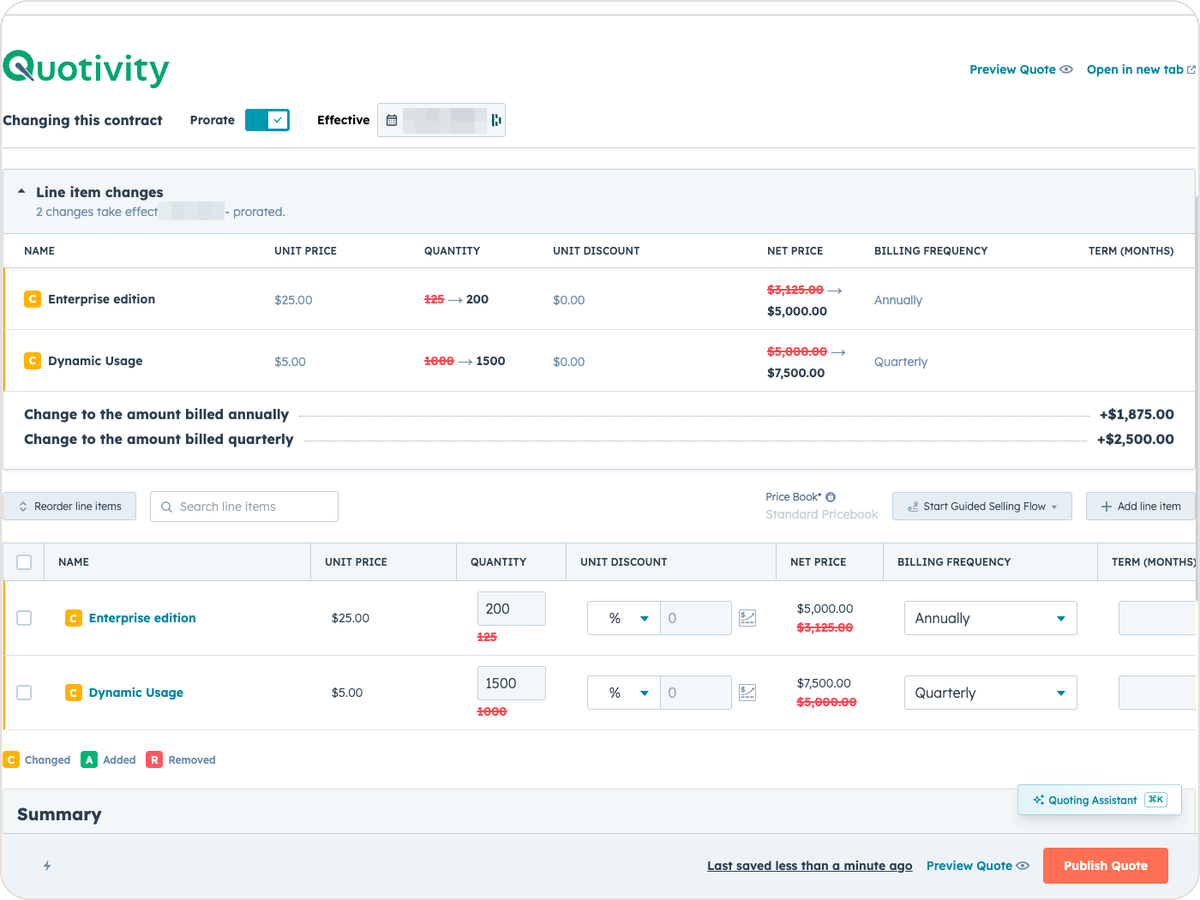
An equipment maker sells a bottler one packaging line. Partway through the term, the bottler calls back. Two more lines are going in, and they want...
Ryan Huff: Sep 2, 2026, 12:00:00 AM
Three changes from August for whoever maintains your Quotivity setup. Two of them, BLANKVALUE and bundle member summaries, are on the Enterprise plan.
Ryan Huff : Aug 25, 2026, 9:25:05 AM
Quotivity's new Calculated Pricing allows for conditional logic in formulas, streamlining pricing decisions without needing multiple systems....
 Nikki Zangardi : May 1, 2025, 12:30:00 AM
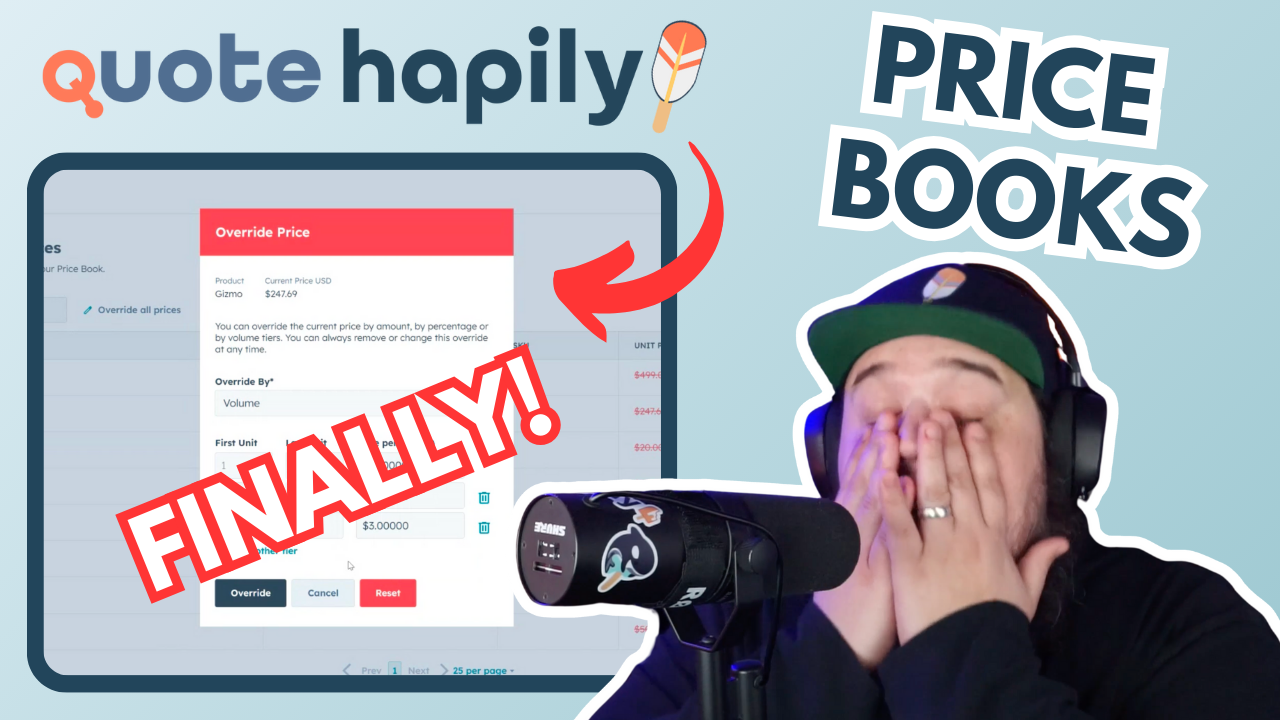
Streamline your HubSpot quoting with Quotivity's Price Books for accurate, automated, and controlled pricing, eliminating errors and boosting sales...
 Ryan Huff : Sep 1, 2026, 12:00:00 AM
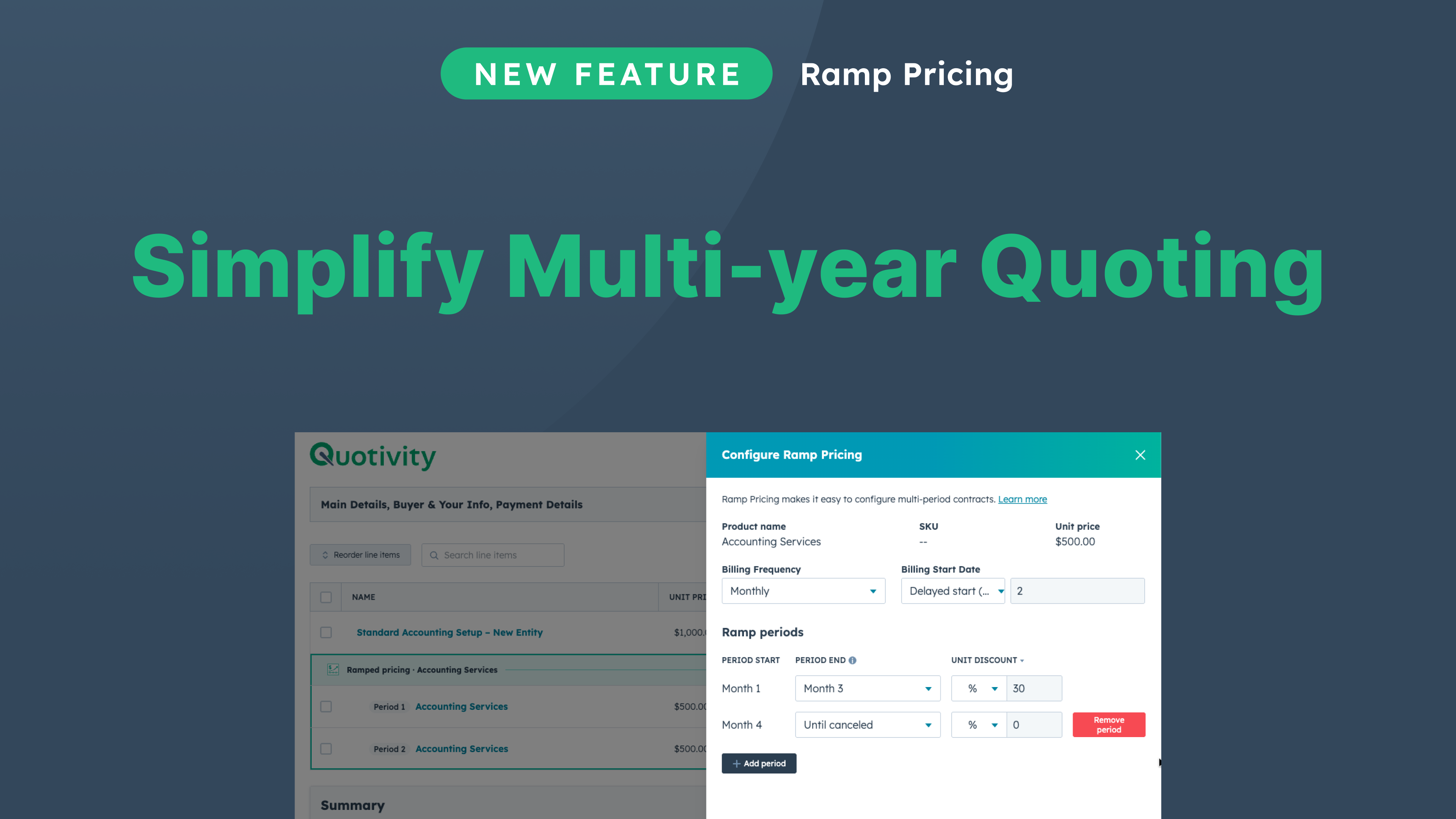
Discover how to effectively implement multi-period ramp pricing in HubSpot, ensuring accurate quotes and streamlined processes for recurring deals.