Product Releases: September Wrap Up
 Ryan Huff: Oct 2, 2026, 12:00:00 AM
Here's what shipped and which plans each one is on. Ramp Pricing and Deal fields are the only Enterprise plan item, and the rest reach every plan.
.png)
Tier 1 accounts need custom configurations. Tier 3 accounts need guardrails.
Most sales teams get account tiering right. They know which customers are Tier 1 (high value), Tier 2 (middle), and Tier 3 (high volume). They know where reps should spend their time.
But then something breaks.
Every deal, no matter the tier, goes through the same quoting process. Same templates, same workflows, same approvals.
For companies with complex products (like manufacturers, HVAC teams, roofers, and service businesses), the quote is the deal. If your quoting process doesn’t match your account strategy, you end up wasting time, losing margin, or both.
If your product is simple, one quoting process might work. But if you’re selling configurable systems, bundled services, or scope-based work, every deal is a little different.
Still, many HubSpot teams rely on a single process. Reps adjust pricing manually, use the same templates, and push every deal through the same approval flow. That usually leads to slower turnaround times, pricing mistakes, and quotes that feel generic when they shouldn’t.
The bigger issue is this: your sales motion is tiered, but your quoting process isn’t.
Tier 1 accounts are your most important deals. They tend to be larger, more complex, and involve more stakeholders. A commercial HVAC install is a good example: it’s not something you can handle with a standard template.
These deals deserve a more tailored approach. Quotes should allow for custom configurations, flexible pricing within clear limits, and collaboration between sales and operations. Approval flows should reflect deal size and risk, not follow a one-size rule.
This doesn’t mean letting reps do whatever they want. It means giving them structured flexibility so they can build the right solution without guessing.
Tier 2 accounts sit in the middle. They matter, but not every deal needs to be fully custom.
Here, the goal is balance. Reps should have some room to adjust, but within defined boundaries.
That usually looks like pre-built packages with a few configurable options, pricing rules built into the process, and lighter approval requirements. It helps reps move faster while still keeping deals consistent and controlled.
Think of it as guided flexibility: you’re giving reps options, not a blank slate.
Tier 3 deals are all about volume. They’re smaller, simpler, and more transactional—like a standard repair or routine service job.
This is where teams often overcomplicate things. They try to customize every quote, which slows everything down.
Instead, Tier 3 quoting should focus on speed and consistency. That means pre-approved products, tightly controlled pricing, and minimal approvals. Reps should be able to build and send a quote quickly without worrying about errors.
Guardrails aren’t restrictive here, they’re what make scale possible.
To make this work inside HubSpot, you need a few things in place. Pricing should be structured by segment or customer type, not handled manually. There should be clear rules for how products and services can be configured. Reps need guidance as they build quotes, and approvals should be tied to deal context—not applied uniformly.
When these pieces come together, things get simpler. Tier 1 deals get the attention they need, Tier 3 deals move faster, and reps spend less time figuring things out. You also reduce risk and protect your margins.
To make this work inside HubSpot, your quoting process should change based on account tier. Here’s what that looks like in practice:
|
Area |
Tier 1 |
Tier 2 |
Tier 3 |
|
Configuration |
Fully custom configurations |
Pre-built packages with some flexibility |
Standardized products or bundles |
|
Pricing |
Flexible within defined guardrails |
Rule-based pricing with limited adjustments |
Fixed or tightly controlled pricing |
|
Rep Guidance |
Collaborative (sales + ops + leadership input) |
Guided selling with structured options |
Highly guided or automated |
|
Approvals |
Multi-step approvals based on deal size/risk |
Conditional approvals (based on thresholds) |
Minimal or no approvals |
|
Speed |
Slower, more deliberate |
Balanced speed and control |
Fast and high-volume |
|
Risk Tolerance |
Higher (but closely managed) |
Moderate |
Low |
|
Quote Experience |
Highly tailored and consultative |
Semi-custom and consistent |
Simple, fast, and repeatable |
Rather than making things more complicated, this is about putting complexity where it actually matters, and removing it where it doesn’t.
Most HubSpot teams weren’t built to handle this level of quoting complexity. That’s why even strong account tiering strategies often fall apart at the quoting stage.
Quotivity helps you bring structure to the process:
Instead of relying on spreadsheets or rep guesswork, you give your team a system that matches how you actually sell.
If you’re dealing with complex products, configurations, or approval-heavy quotes in HubSpot, it’s worth taking a closer look.
👉 Book a demo with Quotivity to see how tier-aware quoting can work for your team.

Ryan Huff: Oct 2, 2026, 12:00:00 AM
Here's what shipped and which plans each one is on. Ramp Pricing and Deal fields are the only Enterprise plan item, and the rest reach every plan.
 Ryan Huff: Sep 30, 2026, 9:50:30 AM
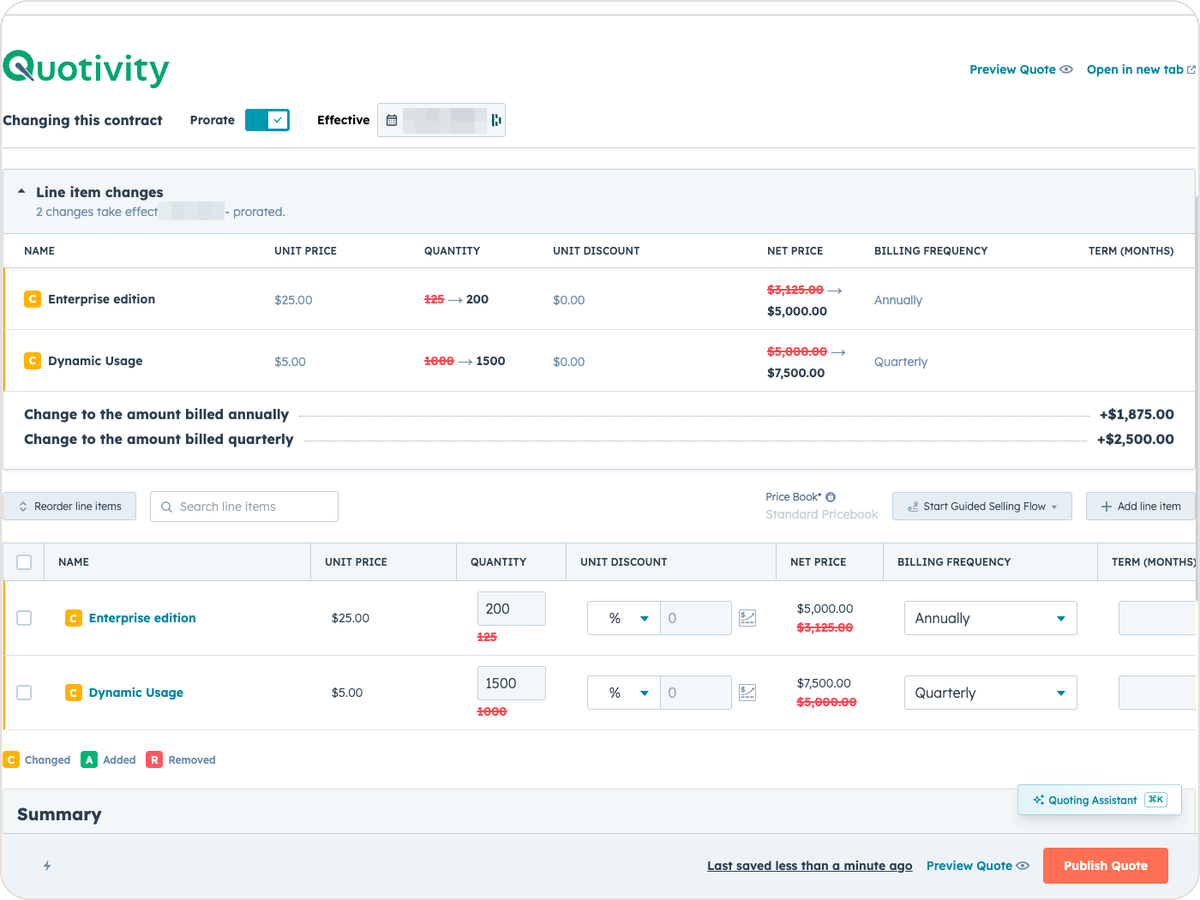
An equipment maker sells a bottler one packaging line. Partway through the term, the bottler calls back. Two more lines are going in, and they want...
Ryan Huff: Sep 2, 2026, 12:00:00 AM
Three changes from August for whoever maintains your Quotivity setup. Two of them, BLANKVALUE and bundle member summaries, are on the Enterprise plan.

 Nikki Zangardi : Aug 29, 2025, 12:00:00 AM
From global pricing to approvals, quoting is rarely simple. See why Advanced Quoting is the future — fast, flexible, and built for how you actually...
 Nikki Zangardi : Apr 30, 2025, 1:45:00 AM
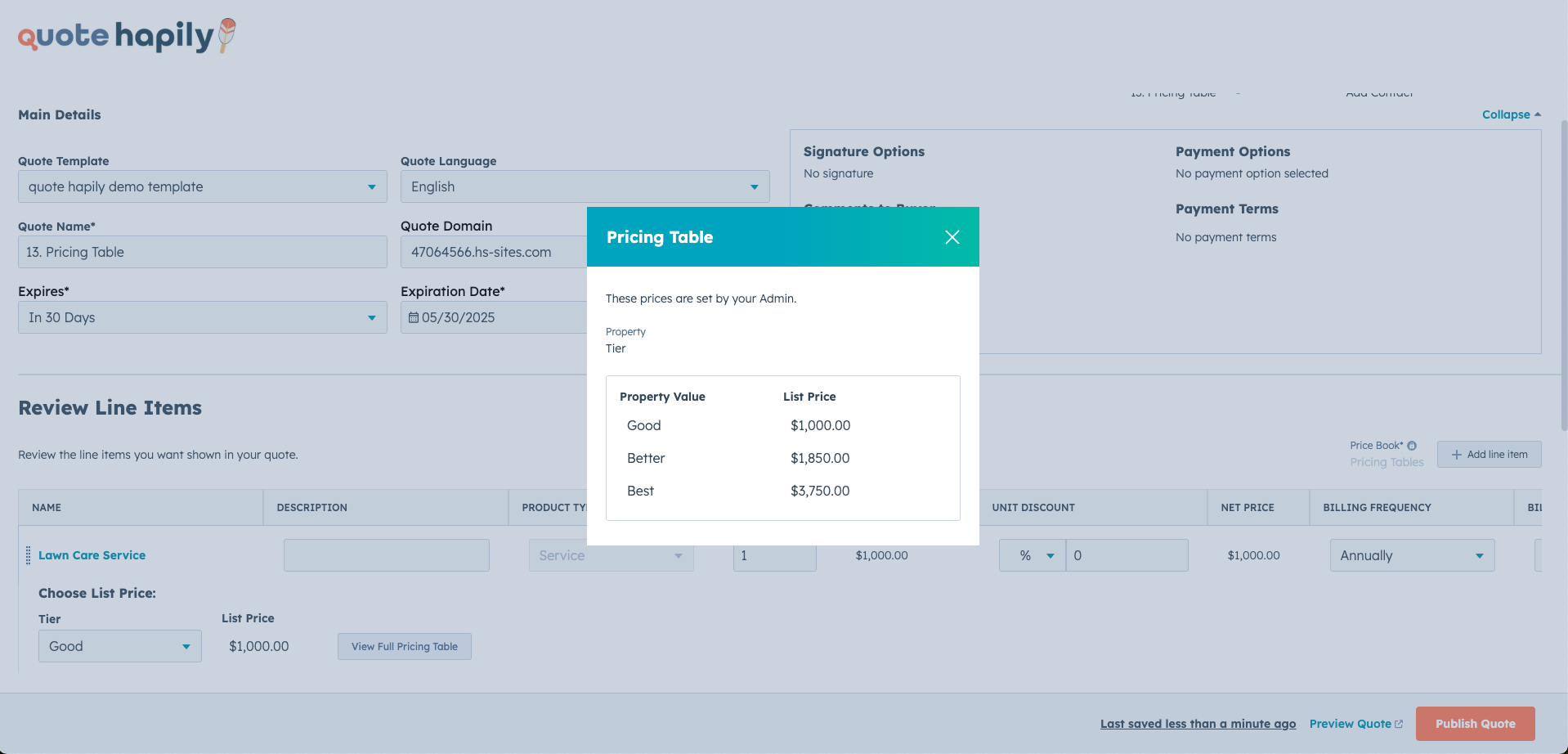
Discover how Quotivity's Pricing Tables ensure accurate, flexible, and automated pricing for your HubSpot quotes, making your sales process seamless...
 Quotivity : Mar 17, 2026, 7:45:00 AM
If quotes take too long to build, pricing lives in spreadsheets, or discount approvals slow deals, your team may have outgrown its quoting process....