Product Releases: September Wrap Up
 Ryan Huff: Oct 2, 2026, 12:00:00 AM
Here's what shipped and which plans each one is on. Ramp Pricing and Deal fields are the only Enterprise plan item, and the rest reach every plan.

A rep spends four hours building a quote. The customer signs. Then somebody re-keys the order into the ERP by hand, the freight line gets adjusted, and by the time the invoice goes out, it doesn't match what the customer agreed to. They call. The dispute takes two weeks to resolve. The payment comes in late, and the margin on that deal is three points lower than it looked on the quote.
Nobody planned for that to happen. But nothing in the process prevented it, either.
Revenue lifecycle management is the practice of tracking and controlling how a deal moves from first quote to final payment, and what happens to revenue at each handoff along the way. It covers the full arc: quoting, order entry, invoicing, collections, and any renewals or expansions that follow.
The term comes up in enterprise software circles, but the problem it describes is not an enterprise problem. A 60-person discrete manufacturer with one sales rep, one office manager, and a part-time controller still has a revenue lifecycle. Most of them just don't have visibility into it.
For a discrete manufacturer, the lifecycle runs through four stages: Quote, Order, Invoice, Collect. At each transition, there is a handoff. And at each handoff, there is a place where money can disappear.
Quote to Order. The rep sends a quote with specific configurations, quantities, and pricing. Someone then has to enter that information into the ERP to create the order. If they're doing it manually, they're re-keying. Re-keying introduces errors. A configuration detail that was on the quote doesn't make it to the order. A price gets rounded the wrong way. A discount that was approved never gets applied. The customer gets an order confirmation that doesn't quite match what they agreed to, and you don't find out until they call.
Order to Invoice. The order ships. The invoice goes out. But the price on the invoice reflects the ERP record, not the original quote. If anything changed during fulfillment, those two numbers may not match. A freight estimate from the quote gets replaced by an actual freight charge on the invoice. A line item gets added or removed. The customer compares the two documents and finds a discrepancy. Now you have a dispute, and disputes delay payment.
Invoice to Collect. Most collections delays aren't about customers who don't want to pay. They're about customers who have a legitimate question about what they're being asked to pay. When the quote and invoice tell different stories, you've given the customer a reason to pause. That pause can stretch into weeks. For a manufacturer running on thin margins and 30-day terms, that delay has a real cost.
The gaps in a revenue lifecycle don't usually show up as a single large loss. They show up as a 2% margin erosion here, a three-week payment delay there, a deal that came in clean and left messy. The revenue leakage accumulates quietly, across dozens of transactions, before anyone thinks to add it up.
Quote management software closes part of this gap by making the quote accurate in the first place. But accuracy at the quoting stage only helps if the quote stays the source of truth through the rest of the process.
That's the problem CPQ connected to your ERP is designed to solve. When the quote feeds directly into the order, and the order feeds directly into the invoice, you're not relying on manual re-entry to preserve the details. The configuration, pricing, and terms the customer agreed to travel downstream with the deal.
For a manufacturer quoting complex products with variable configurations, lead times, and pricing tiers, that connection matters. It's the difference between a revenue lifecycle you can see and control, and one where you're finding out about problems after the customer already has.
 Ryan Huff: Oct 2, 2026, 12:00:00 AM
Here's what shipped and which plans each one is on. Ramp Pricing and Deal fields are the only Enterprise plan item, and the rest reach every plan.
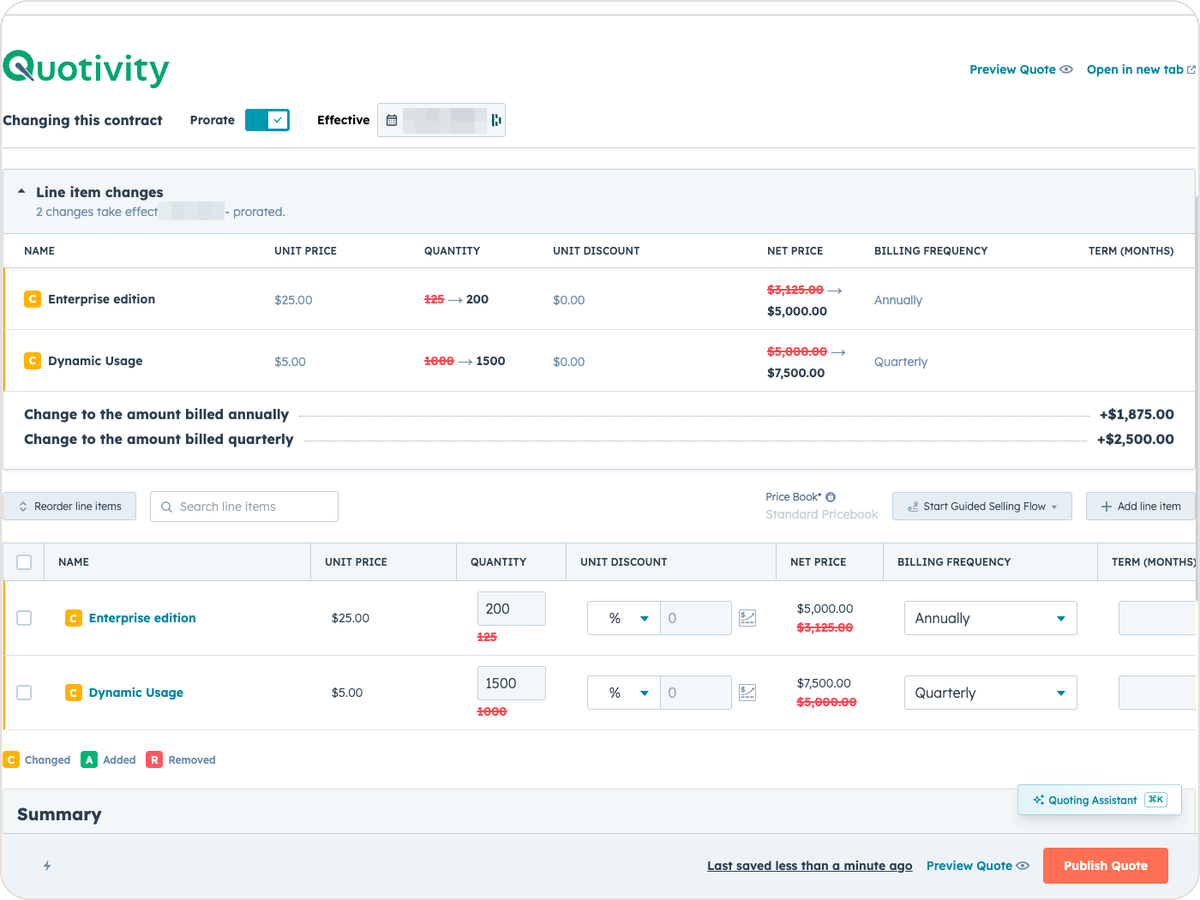 Ryan Huff: Sep 30, 2026, 9:50:30 AM
An equipment maker sells a bottler one packaging line. Partway through the term, the bottler calls back. Two more lines are going in, and they want...
Ryan Huff: Sep 2, 2026, 12:00:00 AM
Three changes from August for whoever maintains your Quotivity setup. Two of them, BLANKVALUE and bundle member summaries, are on the Enterprise plan.
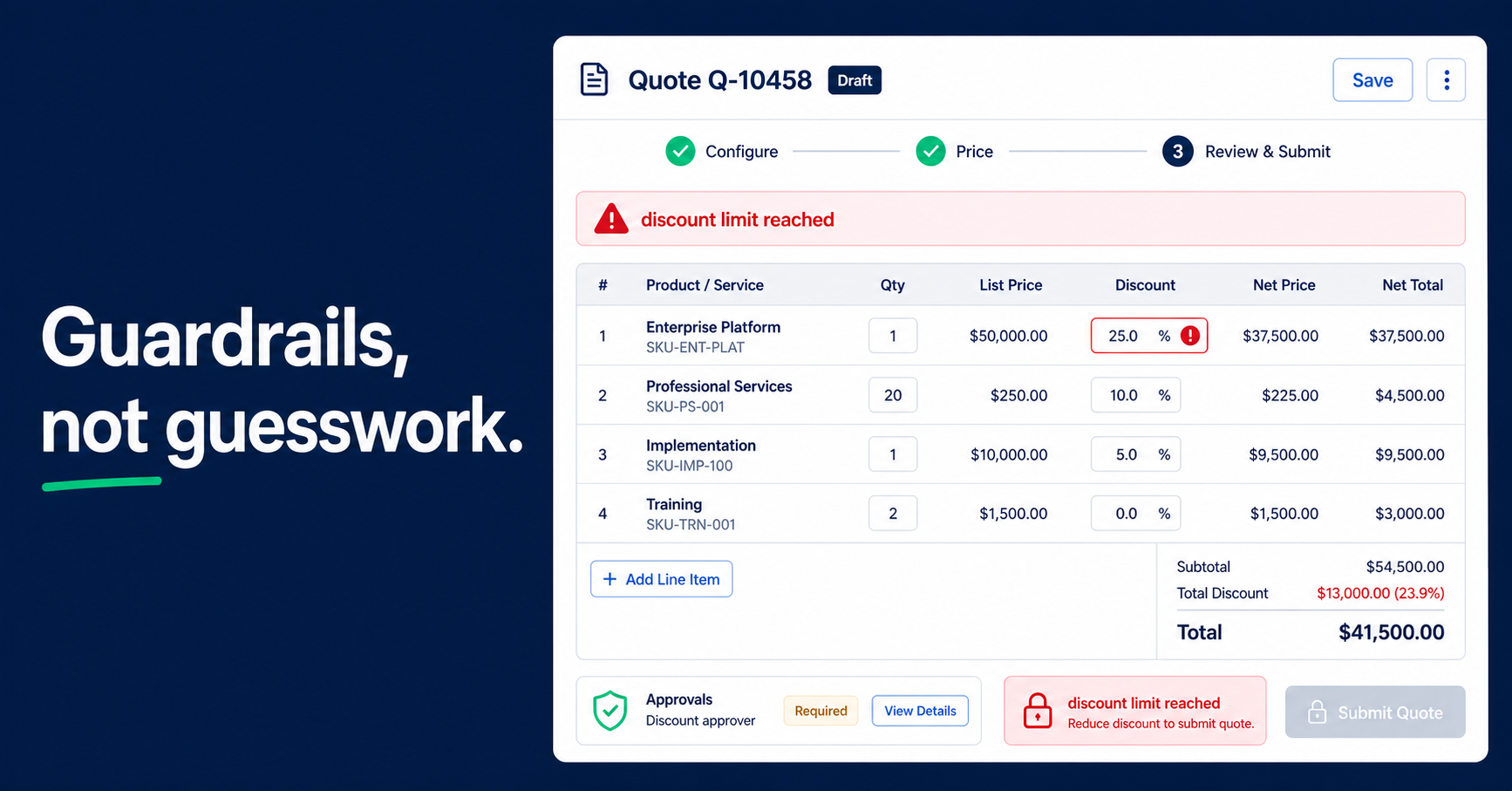
 Quotivity : Jul 16, 2026, 2:14:59 AM
When reps control their own margins, the pricing policy is whatever they felt like that day. Here is what pricing governance actually looks like when...
 Quotivity : Jun 2, 2026, 9:34:41 AM
Configure, price, quote. Three words that describe everything your rep has to get right before a deal can close, and where most manufacturers lose...
 Quotivity : Jun 18, 2026, 8:01:01 AM
Learn why sales reps resort to ballpark pricing and discover how to streamline your quoting process for faster, accurate quotes that protect your...