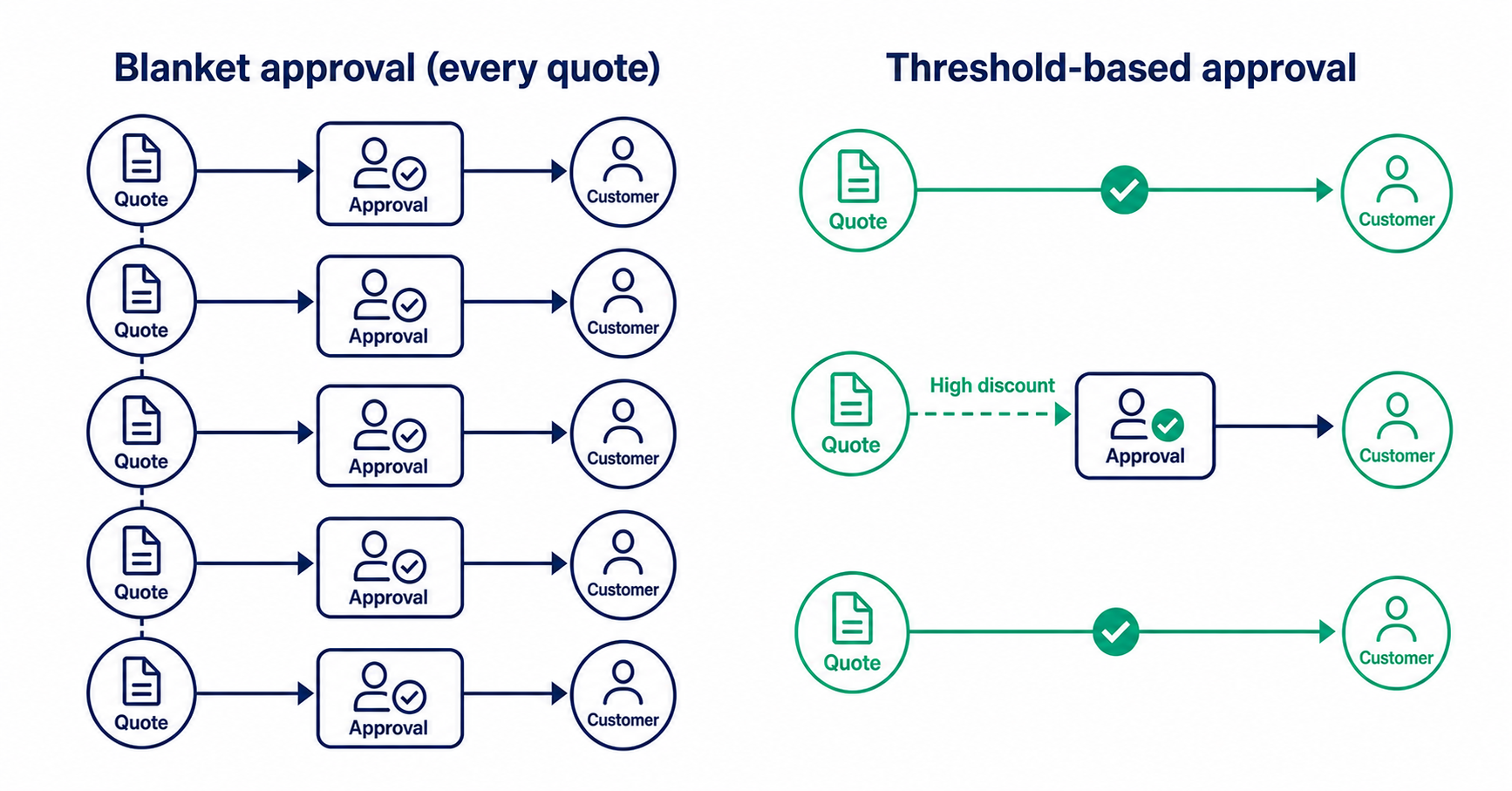
How to Fix Quote Approval Delays in HubSpot
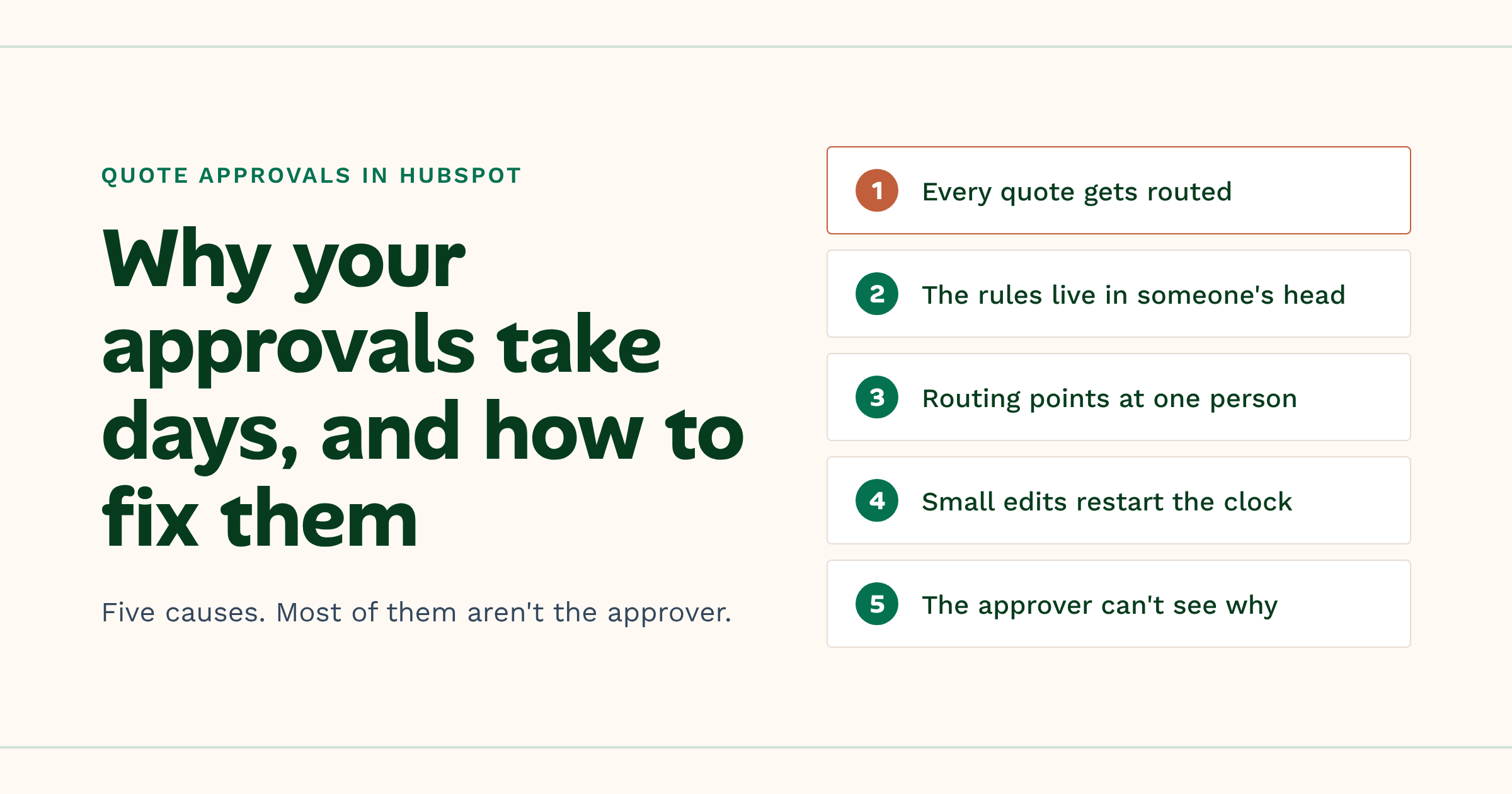
Quote approvals slow HubSpot deals for five reasons. Every quote gets routed. The rules live in someone's head. Approvals go to one named person...
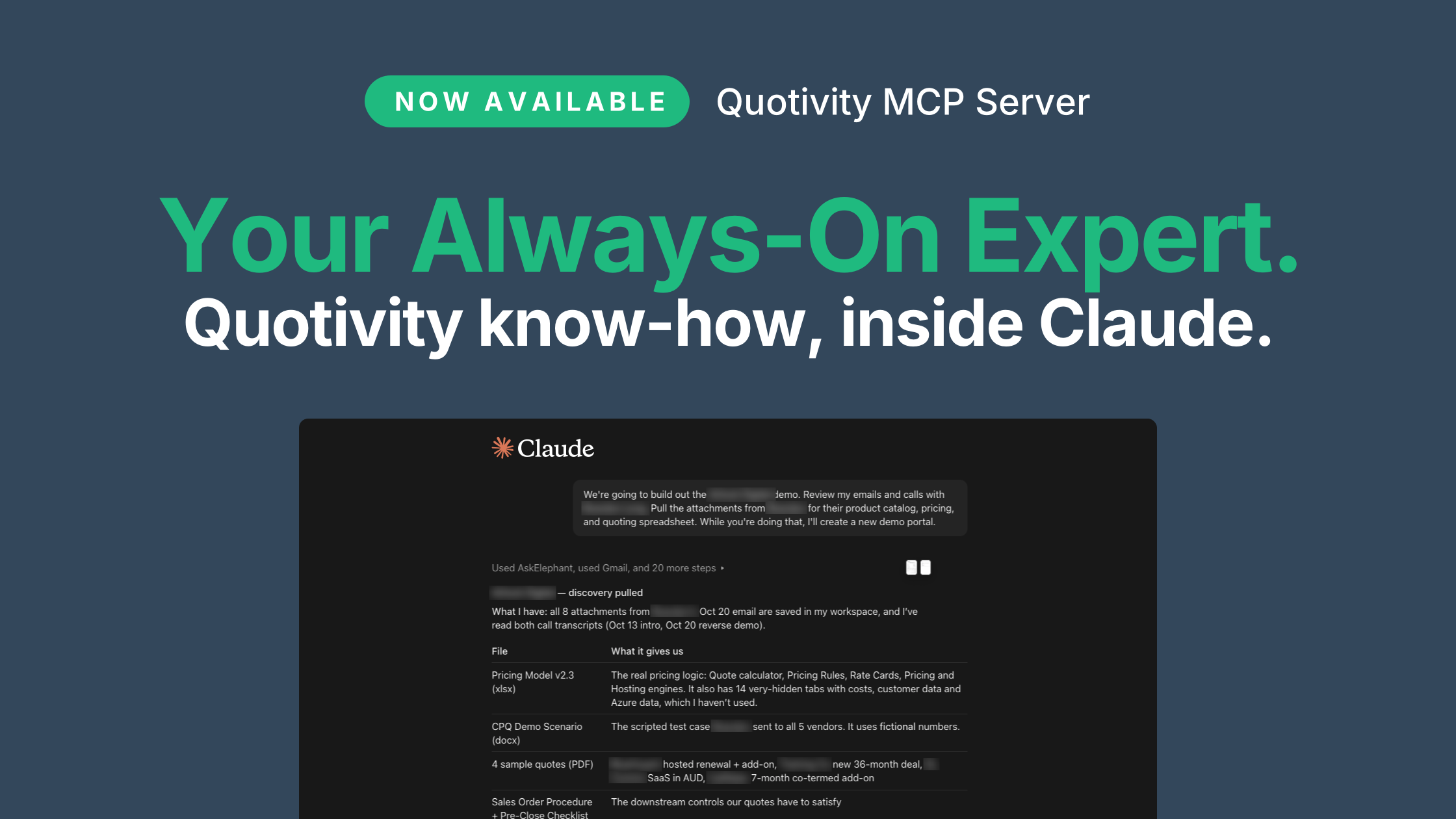
We use the Quotivity MCP server to configure a whole account from a few sales calls and a spreadsheet. Here's how, and what that means for the price book update sitting in your inbox.
Most Quotivity admin work isn't dramatic. A supplier sends a new price list. Product launches a variant that needs to fit an existing bundle. Legal wants new terms on the quote template. Finance wants approval on a discount band that used to sail through.
Each job is small. Together they land on whoever knows the setup best, and that person becomes the bottleneck.
Our MCP server takes a lot of that off their desk. MCP (Model Context Protocol) is the standard that lets an AI assistant like Claude or ChatGPT read and change data in another system. Ours connects it to Quotivity and HubSpot, and it's the same server we use internally for the hardest configuration job we have.
When a prospect evaluates Quotivity, we build their proof of concept on their own products instead of our standard demo. That used to mean real setup work. Now we hand Claude three things: the transcripts from our first two recorded sales calls, the email threads, and the prospect's quoting spreadsheet when they share it.
Claude proposes a design: which products become bundles, which spreadsheet columns turn into compatibility rules, and how pricing should work. I review it and change a few things. Then it builds the entire setup in a brand-new HubSpot portal, with products, sample companies and deals, all wired up to Quotivity.
For one manufacturer this fall, that meant a three-level cascade of compatibility rules (wavelength, then temperature code, then optics), part numbers generated by custom code in a HubSpot validation workflow, and an OEM discount that applied automatically. For product photos, I pointed Claude at their website.
Their RevOps lead said the team often goes in expecting "a ton of speed bumps." She closed the solution call with this: "What you showed us is really, really, really, really close to what we want." They're a customer now.
That's the point of telling you. If the MCP can stand up a full configuration from a spreadsheet and two calls, your routine admin work, like a price book update, is well within reach.
Here's the kind of work customers can hand off today, phrased the way you'd actually ask:
You stay in charge of every one. Ask it to propose before it builds, the way we do, and it shows its work on the parts that bite. A new compatibility rule gets checked for conflicts with your existing rules, and you can preview which bundle selections it would change before it's saved. Approval workflows it creates in HubSpot start switched off, so someone reviews them before they run.
Plenty of AI tools can call an API and create a bundle. We wanted ours to know whether the bundle should exist.
That takes a knowledge layer. Before the MCP acts, it searches a Quotivity product knowledge base covering plan gates, defaults, precedence and troubleshooting. Before it writes, it loads a skill: step-by-step instructions for one job, like building a bundle, writing a quote rule or testing a compatibility rule. There are 20 of them, and each loads only when the job calls for it.
It understands the trade-offs between our pricing models, including price books, volume tiers, calculated pricing and how a bundle gets priced. Guided Selling usually comes first in its designs, because the answers a rep gives in a Flow can drive quote rules and product configuration. Templates and Quotivity settings are in scope too, and HubSpot's own MCP lets it change HubSpot pages and CRM records in the same conversation.
The configuration you maintain is also what your reps quote against. The same server gives them a quoting agent in Claude, ChatGPT or Slack. A rep can ask for a quote on a deal, and the agent finds the company, starts the quote and walks the rep through the Guided Selling questions one at a time. Only answers the rep confirms count.
Bundles go through the same compatibility checks as Quote Builder. Ask "what if I gave them 15%?" and the agent previews the new total, the rules that fire and whether approval kicks in, without saving anything. When the quote's ready, it submits through the same checks as the Publish button and returns the buyer link.
That matters more than speed. Reps will go around a pricing policy if a tool lets them, and an AI assistant that skipped the rules would be the fastest way to do it. Every edit ours makes re-runs the same rules Quote Builder runs.
The server has more than 150 tools across configuration and quoting. Keeping them accurate matters more than the count, because an assistant working from last quarter's documentation will confidently configure last quarter's product. So when a feature ships, its knowledge topics are regenerated and its MCP tools are written automatically as part of the same release.
Admins can connect Claude, ChatGPT or a VS Code agent with Connect an AI assistant with the MCP server. For reps, Creating quotes with Claude, ChatGPT, or Slack covers setup for each tool.
Then pick one job you'd normally put off until Friday, like the next supplier price list, and hand it over. Read what it proposes before you let it build. The person who controls all the bolts gets an afternoon back.
Quote approvals slow HubSpot deals for five reasons. Every quote gets routed. The rules live in someone's head. Approvals go to one named person...
It's been a big month, already. So, rather than waiting another two weeks, we thought we'd send this one out now.
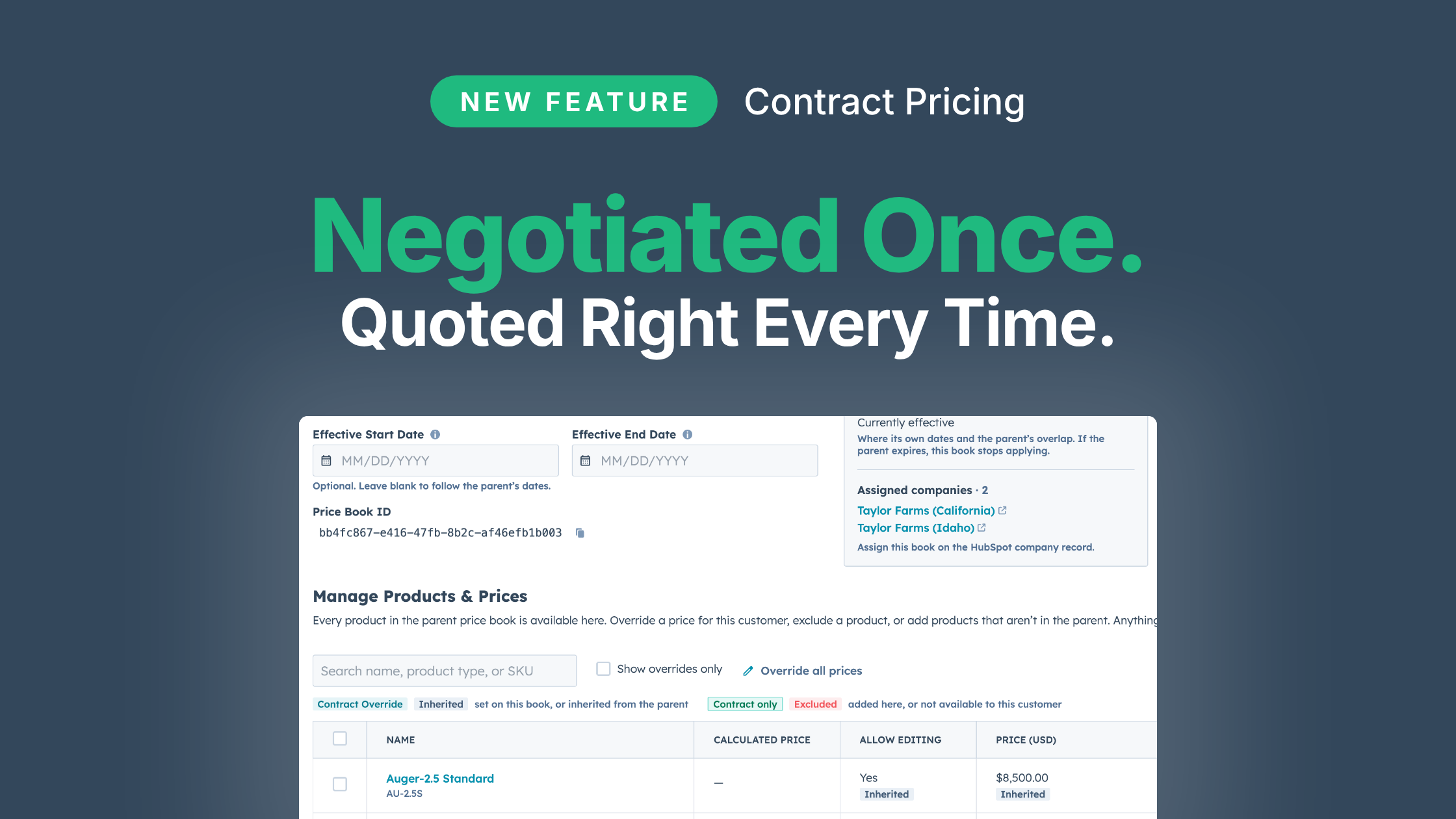
Available on the Enterprise plan. Every account gets the price it negotiated on every quote, without a spreadsheet, a duplicate product or a second...
A quote approval workflow kills deals when it's built to protect the company instead of close it. Here is how to design one that does both.

Discover how Quotivity’s Rules Engine keeps your HubSpot quotes fast, compliant, and airtight — with built-in approvals, smart discount controls, and...