Product Releases: September Wrap Up
 Ryan Huff: Oct 2, 2026, 12:00:00 AM
Here's what shipped and which plans each one is on. Ramp Pricing and Deal fields are the only Enterprise plan item, and the rest reach every plan.

A sales rep at a mid-size manufacturer opens a deal in HubSpot, adds some line items, and sends a PDF to the prospect. The quote looks fine. It has a logo, a price, and an e-signature field. For a lot of businesses, that is enough. For a manufacturer quoting anything with configurable options, tiered pricing, or weight-based freight, it is where the friction starts.
HubSpot quoting is not broken. It does exactly what it was designed to do. The issue is that manufacturing sales has requirements that fall outside that design. Understanding where the line sits helps you decide what to build on top of it, not whether to replace it.
Yes, with a clear-eyed view of what it covers.
HubSpot handles the basics well. You can build a product catalog, add line items to a deal, apply a flat discount, generate a PDF, and collect a signature. The quote lives inside the deal record, so your pipeline stays current and your team sees the same data. For companies selling a short, stable product list at fixed prices, that covers most of the quoting workflow.
Where it gets thin is configurability. HubSpot quotes do not have rules. You can add any combination of products to a line item table, whether or not those products are compatible. You can type any price into a unit cost field, with no guardrail checking whether that number covers your margin. You can send a quote with no approval step, even if the deal has a custom discount that your VP of Sales has never seen.
None of that is a bug. HubSpot is a CRM. It was not built to be a product configurator or a pricing engine. The question is what happens when your quoting process needs those things.
The list is real, and it matters. If you are evaluating whether to add a CPQ layer, you should know what you are already getting.
Deal-linked quotes. Every quote in HubSpot is attached to a deal. Close the deal, and the quote is there in the record history. No hunting through a shared drive or emailing a PDF chain back and forth.
Basic product catalog. You can set up products with descriptions, unit prices, and SKUs. Reps pick from the list rather than typing prices by memory. For a short, stable catalog, this removes a real source of error.
PDF output and e-signature. The output looks professional. Prospects can sign without printing anything. For straightforward deals, this closes the loop without any additional tool.
Pipeline visibility. Quote status shows in the deal record. Managers can see what has been sent, opened, and signed. That is useful data, and HubSpot does it natively.
These are not small things. They cover a lot of the quoting surface area for companies with simple sales.
The gaps show up in specific situations, and they tend to compound once a deal gets complicated.
No product configuration logic. If your products have options that are compatible with some items and incompatible with others, HubSpot does not know that. A rep can build a quote with a motor controller and a drive unit that physically cannot work together. Nothing flags it. The customer gets a quote for something you cannot ship.
No conditional pricing. Volume tiers, customer-class pricing, cost-plus calculations, weight-based freight. None of these are native to HubSpot quoting. A rep either calculates them manually and types the result, or they call someone who knows. Either path introduces error and time.
No approval workflows tied to quote terms. HubSpot has workflow automation, but it does not have logic that says "if this quote has a discount above 15%, route it to the sales director before it sends." That kind of guardrail requires a tool built for it.
No live ERP data at quoting time. If your pricing lives in your ERP and changes based on material costs, lead time, or inventory, HubSpot does not pull that in. A rep quoting from a price book that is three months out of date will quote the wrong number. The error shows up on the invoice, not the quote.
A CPQ layer handles what HubSpot hands off. It adds configuration rules so reps can only build valid combinations. It connects to pricing logic so the numbers reflect actual margins. It creates approval gates for non-standard discounts. It pulls current data from your ERP so the price on the quote matches what your ops team expects to work with.
The important distinction for HubSpot users: Quotivity is HubSpot-native. It is not a separate application that syncs data back to HubSpot on a schedule. It is not middleware that sits between HubSpot and your ERP and requires its own login. The quoting interface lives inside the deal record your reps are already working in. They do not switch tools. The data does not move through an integration layer. The quote is built in HubSpot, with the additional logic that HubSpot alone does not have.
The decision is not HubSpot or CPQ. It is what your quoting process needs that HubSpot was not built to provide, and whether the volume and complexity of your deals makes that worth solving. If you are quoting configured products with margin requirements and approval needs, the answer is usually yes. And if you want a specific accounting of the gaps, 5 Things HubSpot Quotes Can't Do covers each one in detail.
 Ryan Huff: Oct 2, 2026, 12:00:00 AM
Here's what shipped and which plans each one is on. Ramp Pricing and Deal fields are the only Enterprise plan item, and the rest reach every plan.
 Ryan Huff: Sep 30, 2026, 9:50:30 AM
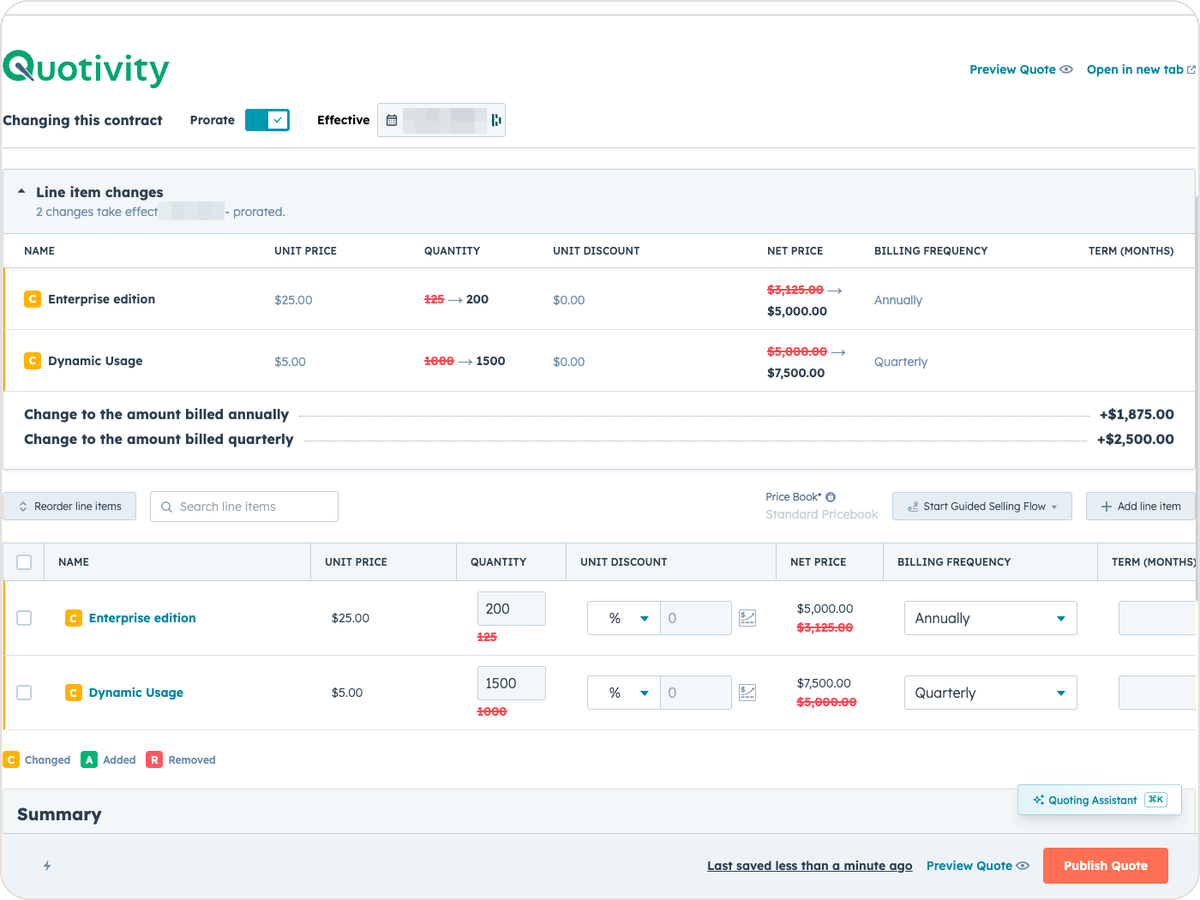
An equipment maker sells a bottler one packaging line. Partway through the term, the bottler calls back. Two more lines are going in, and they want...
Ryan Huff: Sep 2, 2026, 12:00:00 AM
Three changes from August for whoever maintains your Quotivity setup. Two of them, BLANKVALUE and bundle member summaries, are on the Enterprise plan.

 Nikki Zangardi : Aug 29, 2025, 12:00:00 AM
From global pricing to approvals, quoting is rarely simple. See why Advanced Quoting is the future — fast, flexible, and built for how you actually...
 Quotivity : Jul 16, 2026, 2:14:59 AM
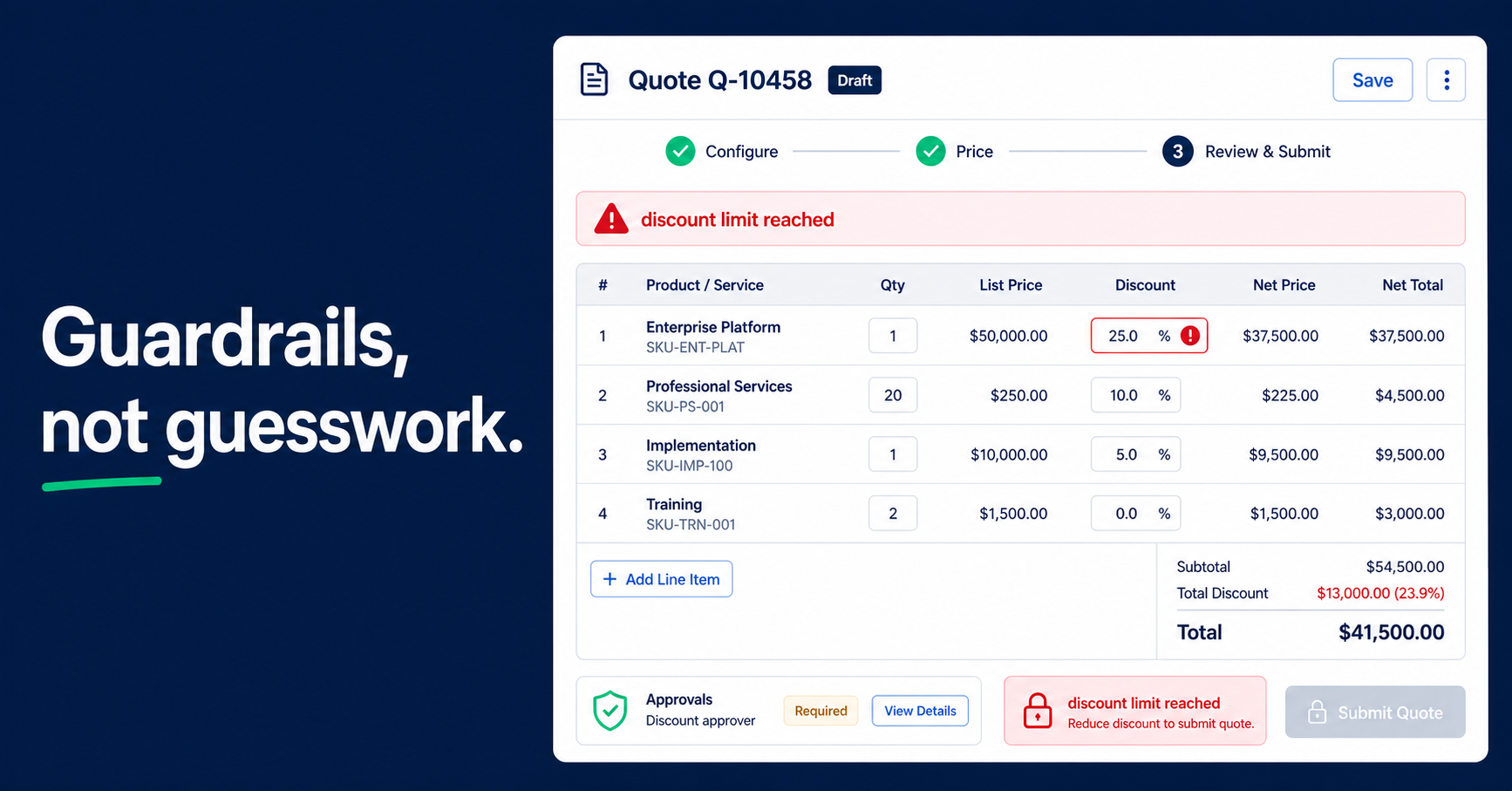
When reps control their own margins, the pricing policy is whatever they felt like that day. Here is what pricing governance actually looks like when...
 Quotivity : Jul 28, 2026, 7:45:00 AM
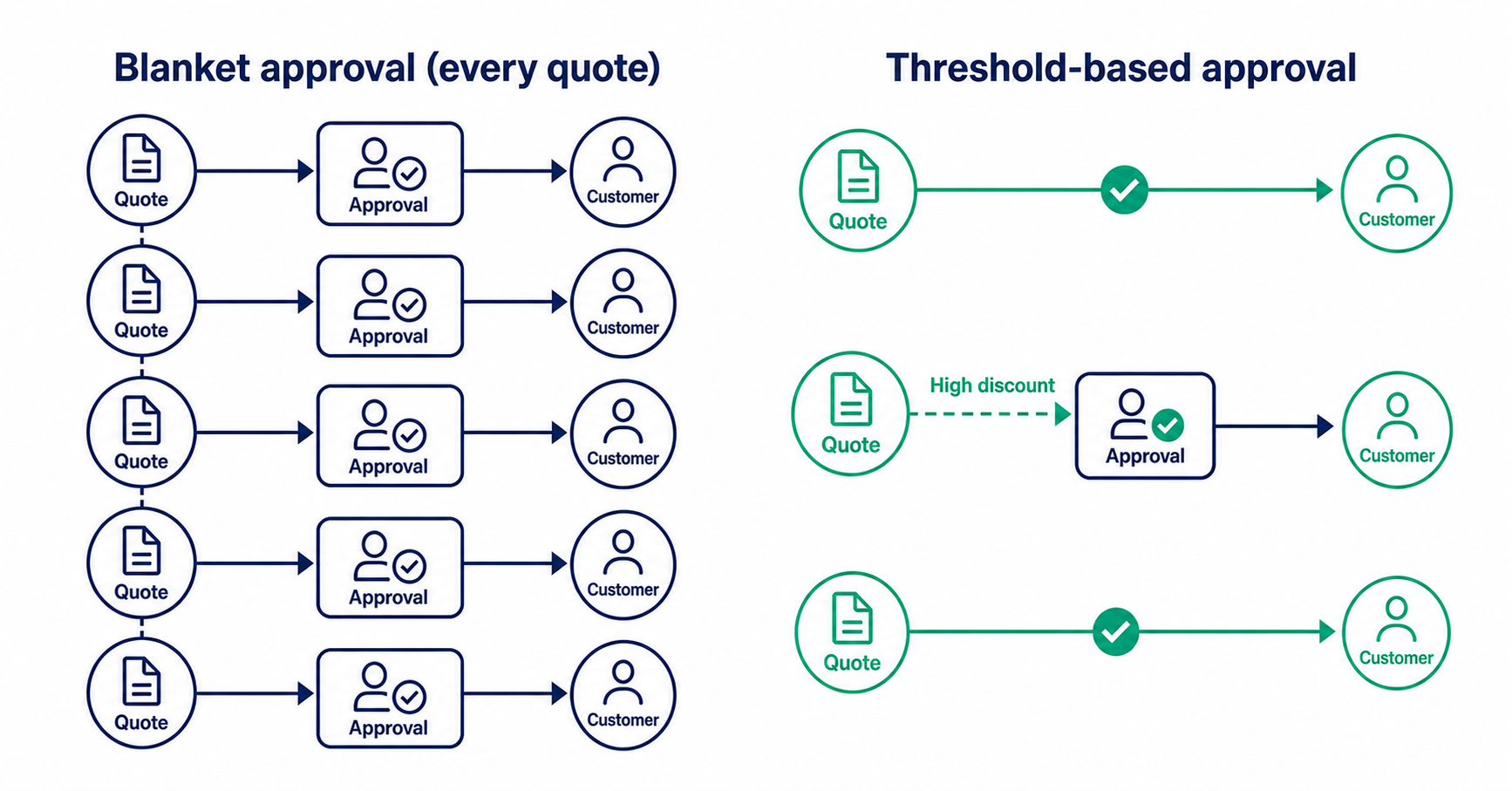
A quote approval workflow kills deals when it's built to protect the company instead of close it. Here is how to design one that does both.