
6 min read

How HubSpot-Native CPQs Supports SaaS Pricing in 2026

A SaaS sales rep builds a quote for a deal that combines annual subscription seats, a usage-based overage component, and a mid-term ramp schedule. The pricing logic for each element lives in three different places: a spreadsheet, a Slack thread, and the rep's memory. The quote goes out. The margin that hits finance three months later tells a different story.

This article explains how CPQ software that runs natively inside HubSpot CRM handles usage-based, tiered, and subscription SaaS pricing models at the point of quote creation. You'll see where standard quoting breaks down, what structural fixes look like, and how Quotivity CPQ encodes pricing logic directly into the rep's workflow.

Key Takeaways: How HubSpot-Native CPQs Supports SaaS Pricing

  • SaaS pricing models like usage-based, tiered, and subscription require quote logic that adapts to each deal's structure.
  • A HubSpot-native CPQ keeps pricing rules, approvals, and catalogs inside the CRM where reps build quotes daily.
  • Quotivity CPQ encodes calculated pricing formulas and conditional rules directly into HubSpot deal and line item records.
  • Price books segmented by customer tier or region eliminate manual price lookups across disconnected systems.
  • Quote accuracy improves when the system enforces guardrails rather than relying on individual rep decisions.

What Makes SaaS Pricing Difficult to Quote Accurately?

A RevOps manager opens the CRM to check last week's closed deals. Three quotes went out for the same product. One used per-seat annual billing. One applied a usage-based overage tier. One combined both into a hybrid contract with a ramp schedule. All three required different math, and none of the math lived in the CRM at the time the rep built the quote.

This is the pattern behind most quoting accuracy conversations in SaaS companies running on HubSpot, and is why so many SaaS companies build spreadsheets to attempt to control the complexity. The pricing model itself is correct. But the quoting workflow doesn't encode that logic into the rep's path.

SaaS pricing creates quoting complexity because the price isn't a static number. It's a formula that changes based on seat count, usage volume, billing cadence, and contract length. When those variables live outside the quoting system, margin erosion becomes structural.

How Does Usage-Based Pricing Work in a CPQ System?

Usage-based pricing ties the quoted amount to a consumption metric: API calls, active users, transactions processed, or data stored. The rep quoting a usage-based deal isn't locking in a fixed price. They're defining a contracted rate structure with thresholds, overage tiers, and committed minimums.

A calculated pricing engine handles this by applying formulas at quote generation. The rep selects the product, enters the estimated volume, and the system outputs the correct monthly or annual figure based on admin-defined rate tables.

It's important that these usage terms are captured as data, rather than as part of a line item description or mentioned in contract language. By capturing that information in line item properties, it's possible to automate billing and licensing system integration — and audit those systems later.

Quotivity CPQ supports this pattern through pricing tables and volume schedules that set the appropriate price based on rep input. The system pulls from the active price book, applies the volume tier, and presents the price. The rep sees the result without touching the formula.

How Tiered Pricing Creates Quoting Complexity

Tiered pricing assigns different per-unit rates at each volume bracket. The first 100 seats cost one rate. Seats 101 through 500 drop lower. Above 500, a third rate applies. This structure exists in pricing documentation, but quoting systems often treat it as a single line item.

The failure mode traces back to a flat product catalog. When your product library stores one SKU with one price, the rep has to manually calculate the blended cost for a 300-seat deal that spans two tiers. That calculation is where errors accumulate.

Quotivity addresses this with tiered pricing rules that calculate the blended rate automatically based on the quantity entered. The quote reflects the correct math at each bracket, and the rep never handles the arithmetic directly.

Where Subscription Pricing Breaks Down in Standard Quoting

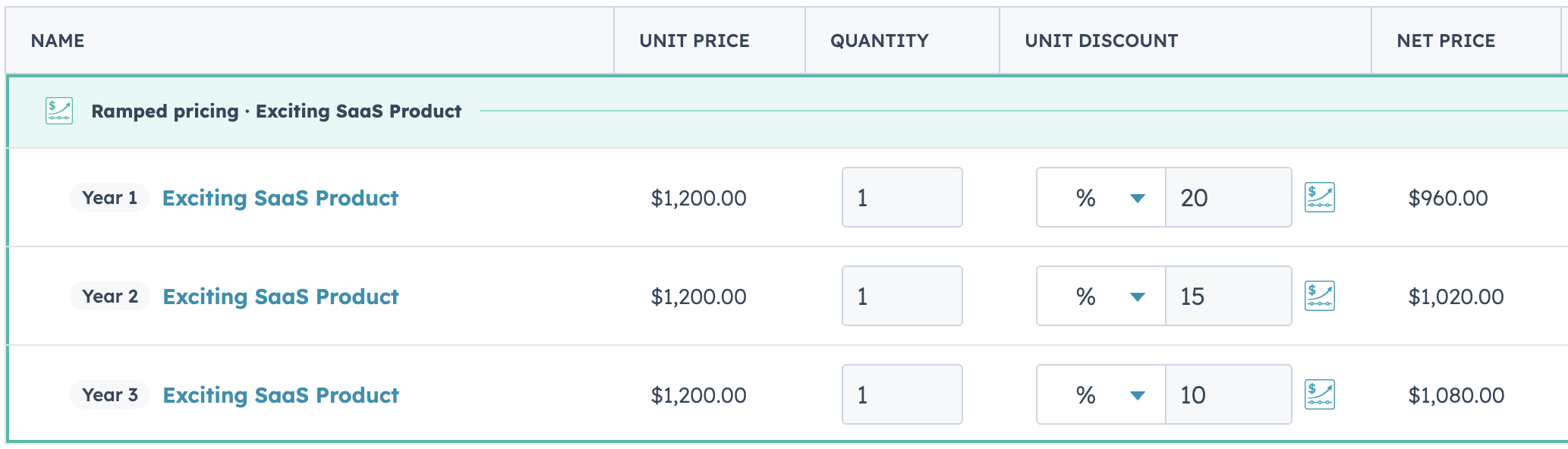
Subscription pricing looks straightforward until the deal includes mid-term upgrades, co-terming, proration, or annual-to-monthly billing switches. A rep quoting a 12-month subscription with a 3-month ramp period at reduced cost is dealing with multiple pricing events on a single line item.

Standard HubSpot quoting treats line items as static entries. If the billing frequency changes or the contract terms require a prorated first month, the rep calculates that manually and enters a custom price. That custom price bypasses whatever governance the team has in place.

A HubSpot-native CPQ built for this pattern encodes ramp schedules, co-term logic, and proration formulas directly into the product configuration. When a rep selects a subscription product, the system prompts for term length and billing cadence, then calculates the correct price for each period automatically.

Why Does Native HubSpot Integration Matter for SaaS Quoting?

The distinction between native and bolt-on CPQ tools traces back to data flow. A native tool operates inside the same interface where reps manage deals. Quote data writes directly to the deal record. Approval workflows trigger from HubSpot automation.

When a CPQ tool sits outside HubSpot, reps switch systems to generate quotes. That context switch creates two problems: data re-entry errors and adoption decay. If the CPQ is harder to use than a spreadsheet, reps default to the spreadsheet. By the time the quote reaches finance, the pricing may not match what the customer actually agreed to.

"Native" is also a promise. It's a promise that the CPQ will be truly interoperable with HubSpot, ensuring that the investment you've made in reporting, integration, and revenue operations workflows continue to operate smoothly and consistent with your expectations.

Quotivity CPQ lives on the HubSpot deal record. Reps build quotes from the same screen where they manage pipeline, and the rules engine enforces pricing logic before the quote goes out. No tab switching. No parallel system to maintain.

How Pricing Guardrails Protect SaaS Margins

SaaS margin erosion rarely comes from a single bad deal. It comes from a hundred small pricing decisions made without structural constraints. A rep offers 5% extra to close faster. Another quotes from last quarter's rate card. A third applies a price approved verbally but never documented.

Guardrails address this by encoding pricing governance into the quoting workflow. Discount thresholds trigger automatic approval routing. Margin floors prevent quotes from going below a defensible target. Required fields prompt reps for information that validates the pricing logic before the quote generates.

Quotivity's approval workflows enforce these constraints directly inside HubSpot. When a quote hits a discount threshold or drops below a margin target, the system routes it to the correct approver with full deal context attached. The rep doesn't send a quote that finance hasn't sanctioned.

What Role Do Price Books Play in Multi-Model SaaS?

SaaS companies selling across multiple pricing models often maintain separate rate structures for different customer segments. An enterprise tier has negotiated rates. A growth tier uses standard list pricing. A partner channel gets volume-based discounts. Each segment needs its own price book.

Dynamic price books in Quotivity assign the correct catalog based on account properties in HubSpot. A rep working an enterprise deal pulls prices from the enterprise book automatically. The system prevents cross-contamination between pricing tiers without requiring the rep to choose the correct list manually.

Pricing drift tends to accumulate quietly. If reps can access any price book, or if only one exists with override permissions for everyone, the actual prices quoted diverge from the intended model. Segment-specific price books built into the CPQ workflow eliminate that drift structurally.

How Quote Accuracy Connects to Revenue Recognition

An inaccurate quote creates downstream problems beyond the initial deal. Finance teams reconciling invoices against signed quotes find discrepancies. Revenue recognition timelines shift when contract terms don't match what was quoted. According to a 2025 Nucleus Research report, organizations using modern CPQ platforms report a 20 to 30 percent reduction in quoting errors.

A CPQ system that captures complete pricing logic at the point of quote creation gives finance a clean data trail. Every price adjustment traces back to a rule. Every approval has a timestamp and an owner. Every custom term triggers a documented workflow.

Every change to a quote or line item is captured in property history, creating a full audit trail that finance and RevOps teams can reference during revenue reconciliation. That record lives in HubSpot, accessible to everyone who needs it.

In Conclusion: Building SaaS Pricing Logic Into the Quoting Workflow

The common thread across usage-based, tiered, and subscription pricing models is this: the complexity lives in the rules, not in the products. When those rules exist outside the quoting system, every quote becomes an opportunity for the wrong price to reach the customer.

The version of this problem at your company might look slightly different. Maybe your ramp schedules live in a spreadsheet. Maybe your tier breaks exist only in a pricing doc that hasn't been updated since last quarter. The fix is structural: build the pricing logic into the workflow where reps generate quotes, not into training materials they forget by Tuesday.

Quotivity CPQ brings that structural fix to HubSpot. Get a demo.

FAQs About HubSpot-Native CPQ for SaaS Pricing

Can a HubSpot-native CPQ handle usage-based SaaS pricing?

Yes. Quotivity CPQ supports usage-based pricing through calculated pricing formulas and volume-based rate tables. The system applies the correct rate at each volume threshold automatically, so reps generate accurate quotes without manual calculations.

How does tiered pricing work in Quotivity CPQ?

Quotivity CPQ applies tiered pricing rules that calculate a blended rate based on quantity entered. Each volume bracket carries its own per-unit rate, and the system handles the math across brackets to produce an accurate line item total on the quote.

What happens when a subscription deal requires mid-term changes?

Quotivity CPQ handles mid-term adjustments through co-term logic, proration formulas, and ramp schedules encoded in the product configuration. When contract terms change, the system recalculates pricing automatically so the updated quote reflects the correct amounts for each period.

Does Quotivity CPQ work directly inside HubSpot?

Quotivity CPQ operates natively on the HubSpot deal record. Reps build quotes from the same screen where they manage pipeline activity, and pricing rules enforce themselves during quote generation. No external system. No context switching.

How do pricing guardrails prevent margin erosion in SaaS deals?

Quotivity CPQ enforces discount thresholds, margin floors, and conditional approval routing directly in the quoting workflow. When a quote exceeds a pricing boundary, the system blocks it and routes it for approval before it reaches the customer.

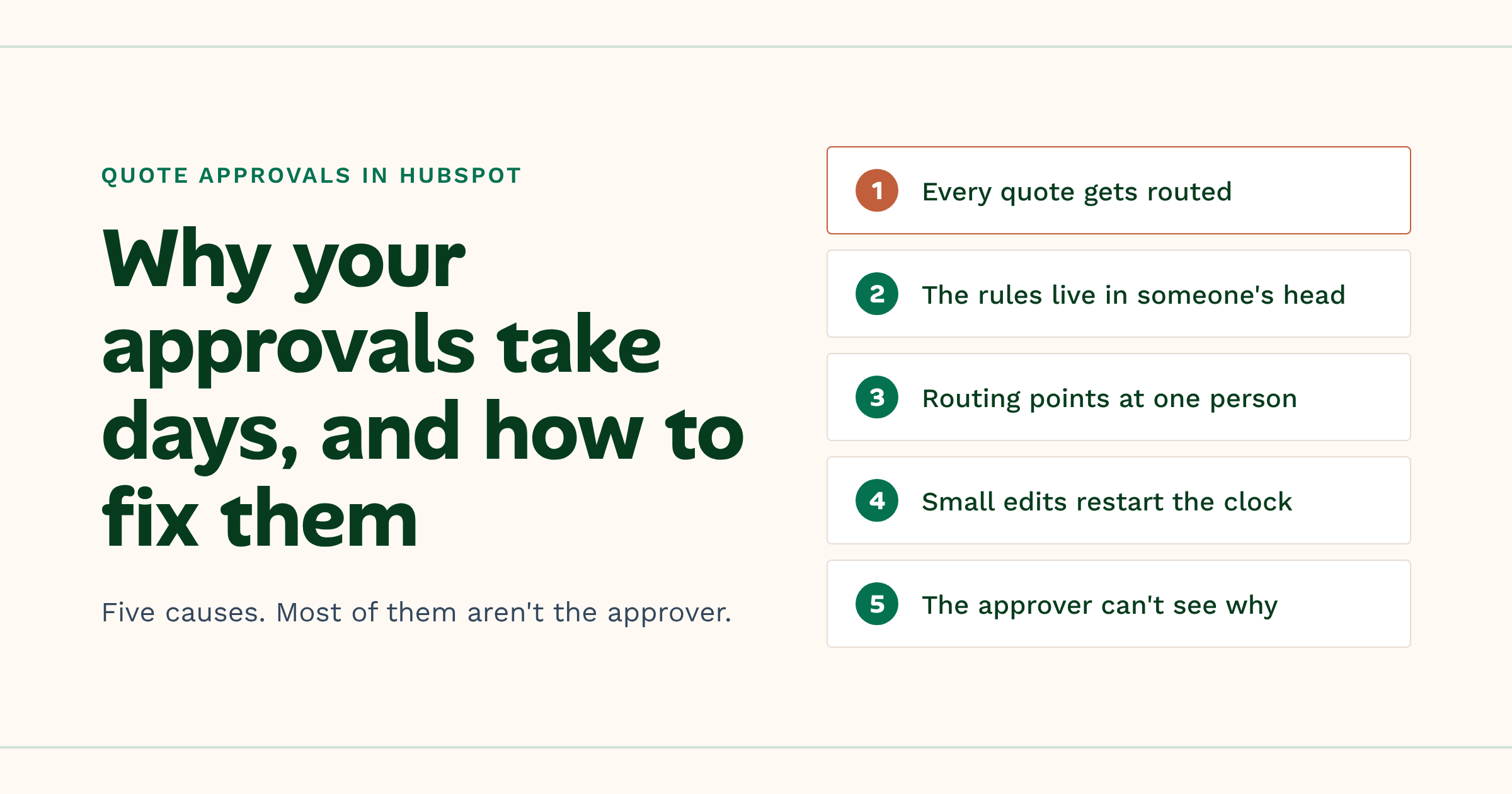
How to Fix Quote Approval Delays in HubSpot

How to Fix Quote Approval Delays in HubSpot

Quote approvals slow HubSpot deals for five reasons. Every quote gets routed. The rules live in someone's head. Approvals go to one named person...
Read More

Product Releases: Mid-November Wrap Up

It's been a big month, already. So, rather than waiting another two weeks, we thought we'd send this one out now.
Read More
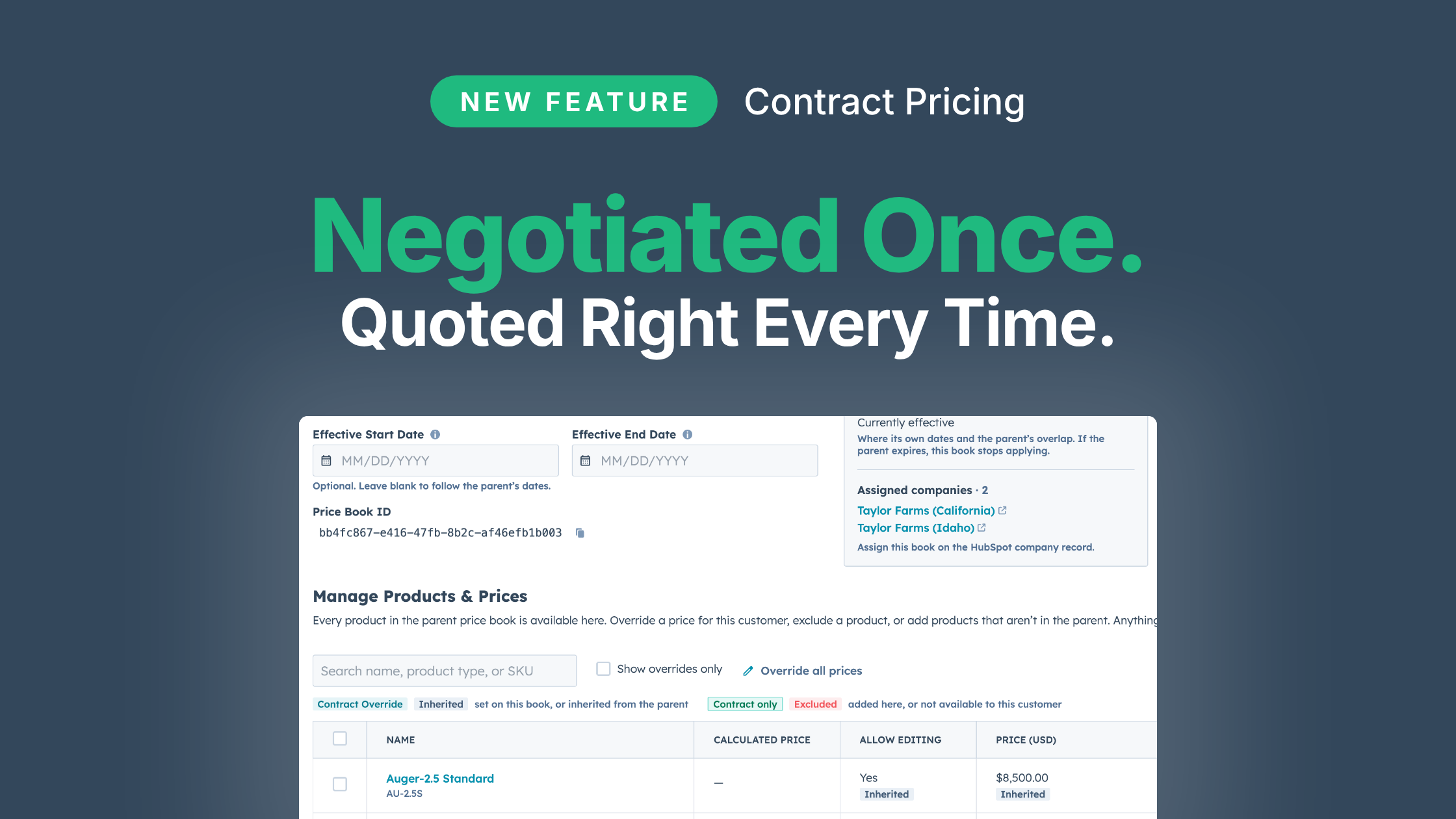
Contract Pricing: Negotiated once, quoted right every time

Contract Pricing: Negotiated once, quoted right every time

Available on the Enterprise plan. Every account gets the price it negotiated on every quote, without a spreadsheet, a duplicate product or a second...
Read More
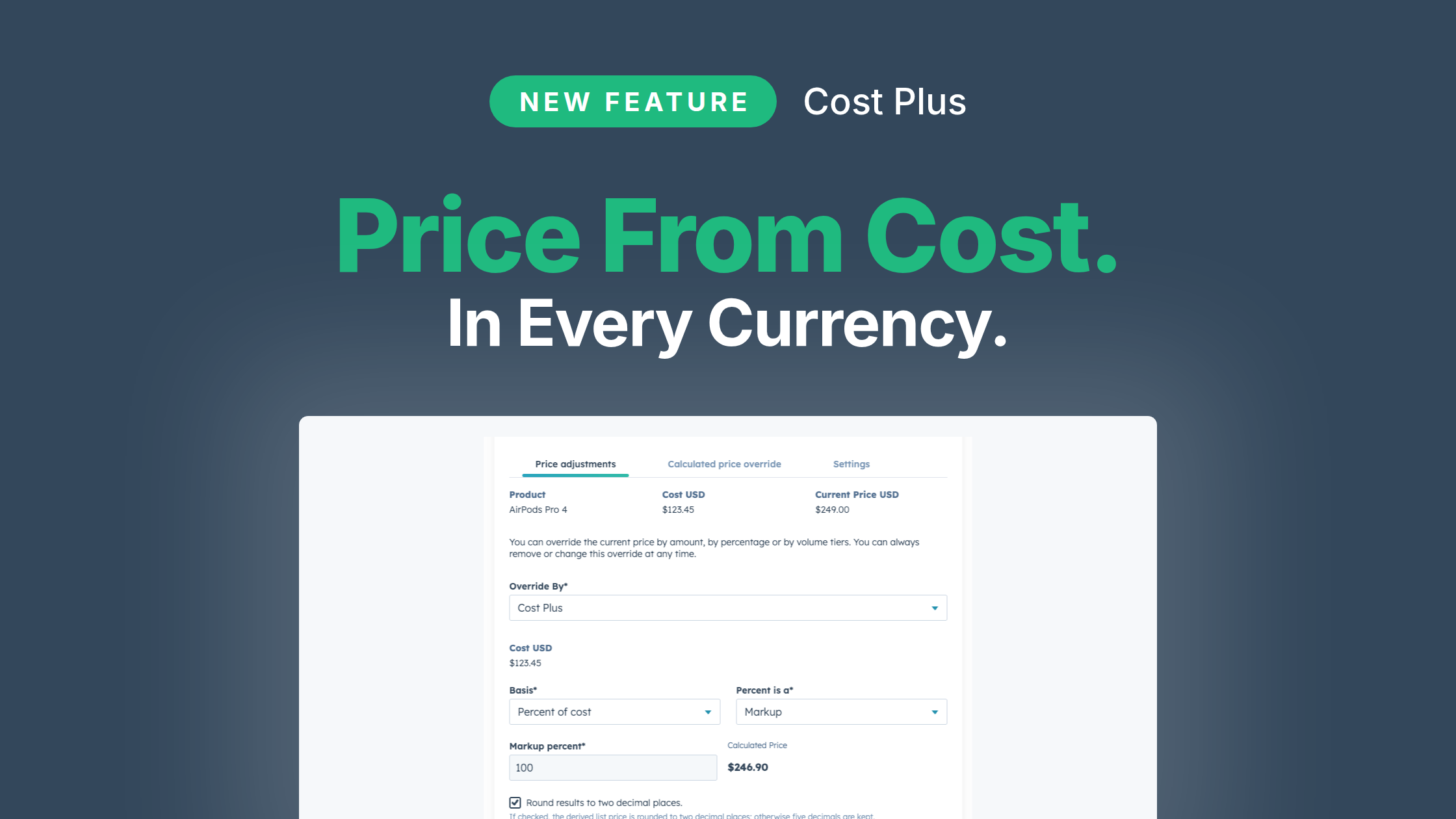
Price the quote from the cost you already have

Price the quote from the cost you already have

Streamline your pricing strategy with Cost Plus in Quotivity, simplifying multi-currency adjustments and enhancing profitability without the hassle...
Read More
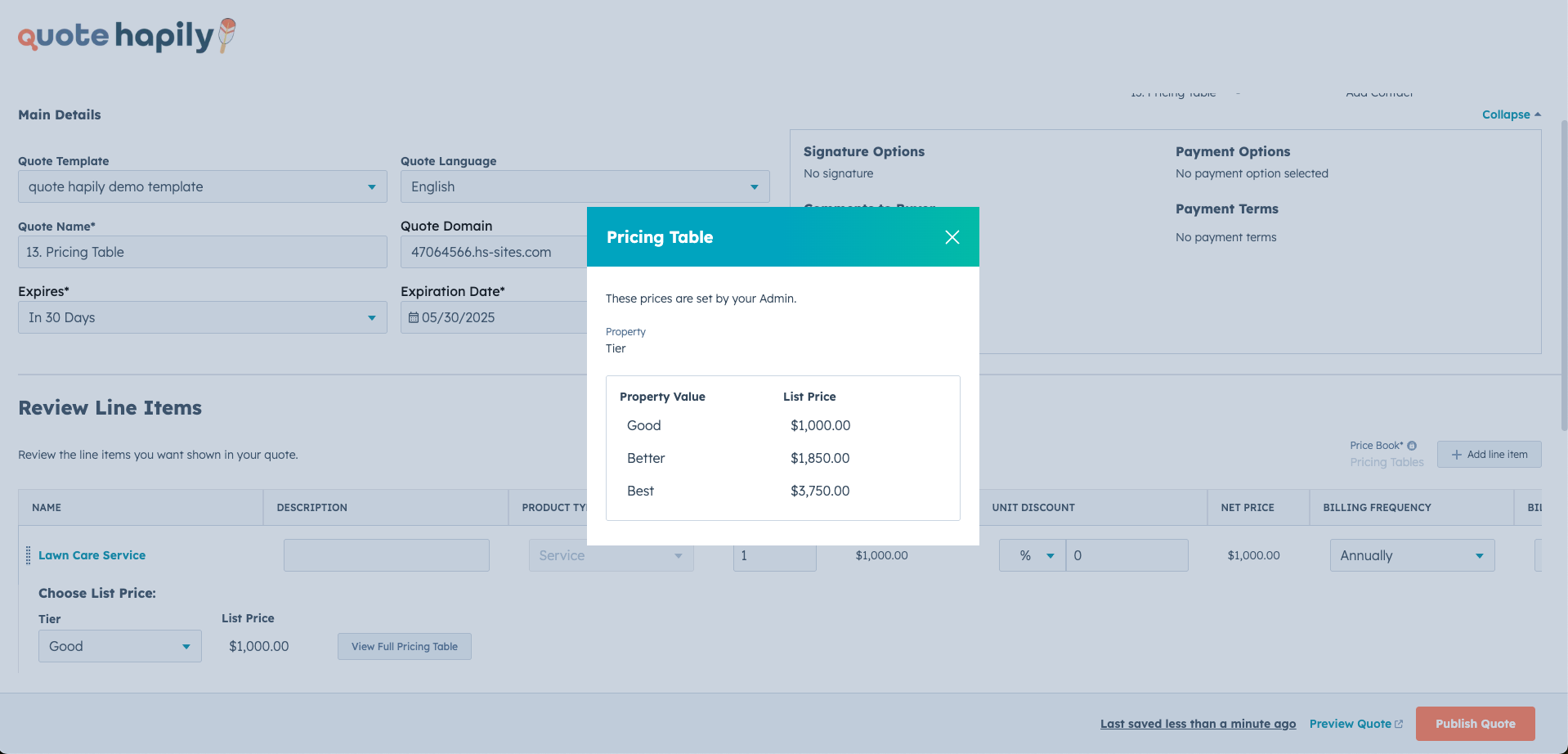
Smarter Quotes Start with Smarter Pricing: Meet Pricing Tables

Smarter Quotes Start with Smarter Pricing: Meet Pricing Tables

Discover how Quotivity's Pricing Tables ensure accurate, flexible, and automated pricing for your HubSpot quotes, making your sales process seamless...
Read More
Ramp Pricing: Your 3-Year Deal Shouldn't Need a Spreadsheet to Quote

Ramp Pricing: Your 3-Year Deal Shouldn't Need a Spreadsheet to Quote

Streamline your multi-year contract quoting process with Quotivity's new Multi-Period Ramp Pricing feature, eliminating manual errors and saving time.

Read More